Creating a better, brighter future with the power of science
Science Tokyo’s vision-driven transformation as a University for International Research Excellence
A vision-driven research and education framework born from a backcasting approach
Ohtake
Since its establishment in 2024, Science Tokyo has upheld its mission of “advancing science and human wellbeing to create value for and with society.” The Institute is working to fundamentally transform its research and education systems with the launch of the Visionary Initiatives (VIs), which together form a vision-driven, cross-disciplinary framework.
Science Tokyo applies a backcasting approach—focusing not on what we should do, but on a more proactive vision of what we want to become, and then working backward toward that goal.
In the Society 5.0 era, AI and big data are expected to drive solutions to societal challenges and economic growth, and people’s aspirations have changed. At a time when we cannot predict tomorrow, envisioning a linear future has become very difficult. That is why a vision-driven framework is necessary—one in which we first set a vision and then design and implement the science, technology, healthcare, education, and social systems required to realize that vision, while transcending disciplinary boundaries.
Tanaka
While the merger of TMDU and Tokyo Tech laid the groundwork for collaboration between medicine and engineering, the VIs create a framework that encompasses a wider range of research fields and stages. Currently, the VIs focus on eight thematic areas, including health, space, and environment and energy. Nearly 100 percent of full-time faculty members are involved in one of these areas. The VIs bring together people whose interests align with the vision behind each initiative, going beyond traditional boundaries between research fields and academic disciplines—from science and engineering to the medical and dental sciences, and even the liberal arts. The VI participants work together with various stakeholders to design and implement solutions that help realize these specific visions.
For now, Science Tokyo maintains the existing discipline-based structure in its undergraduate program. However, the Institute is planning the launch of cross-disciplinary graduate programs starting in academic year 2028. Transformations will continue to be implemented based on the VIs, not only in research but also in education.
Ohtake Having all faculty members participate in the VIs represents a major step forward, as it helps them internalize their respective visions. Science Tokyo aims to leverage the collective strength that comes from blending different forms of knowledge—not through the mere variety of isolated expertise, but through dynamic diversity that is actively driven and created by Science Tokyo. In this way, the Institute can build an ecosystem that is widely open to society and strives to realize a better, brighter future that goes beyond the resolution of societal issues.
Tanaka
Science Tokyo’s undertaking is indeed a grand challenge, and the enthusiasm of faculty members is clearly visible. Various issues remain, including implementing concrete measures to realize these visions, devising methods for societal impact assessment, and striking the right balance with traditional research evaluations in specialized fields. That said, there is no other university that has built such a comprehensive, vision-driven research and education framework across the entire institution.
Going forward, the VIs will further strengthen partnerships with society, businesses, local communities, and research institutions both at home and abroad. This approach has already garnered significant interest and praise from companies and other leading universities.
Notable potential lies in new collaborations with life science researchers at Ochanomizu University — a member of the Future Leading Innovation Partnership (FLIP) — and the incorporation of a lifestyle perspective into the VIs. Science Tokyo is also currently working to supplement areas that are beyond its present scope — such as agricultural research and policy research — by collaborating with various specialized institutions.
Aiming for a world-leading research environment as Japan’s second University for International Research Excellence
Ohtake In January 2026, Science Tokyo was accredited as Japan’s second University for International Research Excellence, following Tohoku University. This government program provides long-term support for universities that advance internationally outstanding research and apply the outcomes of that research to effect socioeconomic changes, bringing new value to society. In this regard, Science Tokyo’s plan is designed to advance its mission over a 25-year period of transformation.
Tanaka The program employs a matching fund system in which grant amounts are calculated based on funding secured from companies and private organizations. Therefore, the importance of securing external funding will increase going forward. This accreditation has brought more exposure to the Science Tokyo name. Interest from companies and financial institutions is growing rapidly, and a range of stakeholders within and outside the Institute are expressing their positive feedback and excitement. Science Tokyo is highly aware of society’s expectations and appreciation for this challenge to realize an unparalleled university model.
Ohtake Over the first six years of the program, Science Tokyo will transform into a vision-driven organization, with the VIs at its core. A key component in the next nine years will be the advancement of a comprehensive co-creation ecosystem with the world. In the final decade of the program, Science Tokyo aims to achieve financial sustainability and a world-leading research and education environment. Look out for Science Tokyo as it embraces these challenges in the next 25 years.
Leading the development of a global network of academia and industry through international collaborations
Ohtake
Science Tokyo is working to build a global research and education network through partnerships with leading universities overseas. In 2025, the Institute signed a strategic partnership agreement with RWTH Aachen University in Germany, and in 2026, with Imperial College London in the United Kingdom. Both universities have long-standing ties with Science Tokyo and have expressed strong support for the VIs. Science Tokyo is also applying a multifaceted approach to strengthen ties with the Boston ecosystem, including Massachusetts Institute of Technology and Harvard University.
The establishment of a global industry-academia network stewarded by Science Tokyo will facilitate collaboration with startups overseas, with which contact has been limited to date. Moving forward, Science Tokyo aims to join forces with partners at home and abroad who share its vision, tackle various challenges, and explore new ways to leverage the network between industry, academia, and government.
In these uncertain times, building a global academic network based on a shared vision, while advancing research and talent development, will benefit the future of Japan and the world. Science Tokyo is eager to play a leading role in driving this international ecosystem toward the realization of a better, brighter future.
Tanaka
In the era of AI and robotics, it is time to reexamine not only the roles that humans can play, but also the role of university education. Universities can be places where critical thinking skills are honed to arrive at answers that AI cannot provide. With its expertise in cutting-edge science and engineering, life sciences, and medical and dental sciences, Science Tokyo is ideally positioned to create a new model of university education that is essential for the future.
As a University for International Research Excellence, Science Tokyo is firmly committed to working and growing with society, while creating a better, brighter future together.
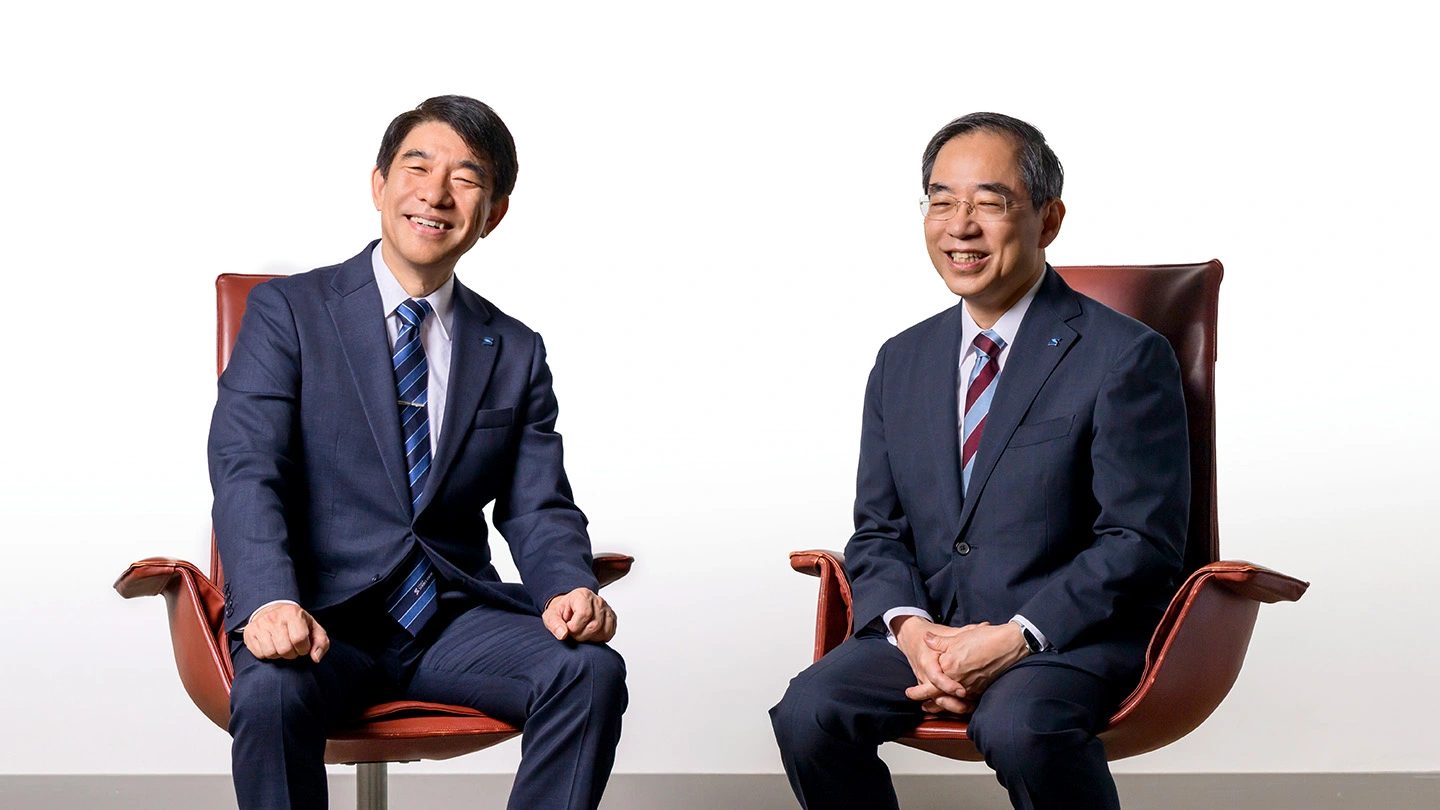
Naoto Ohtake
President and Chief Executive Officer (CEO), Institute of Science Tokyo
Ohtake earned his doctoral degree in mechanical engineering from Tokyo Tech in 1992. He became a professor of the Department of Mechanical Sciences and Engineering, Graduate School of Science and Engineering, Tokyo Tech in 2010. He was appointed the director-general of the Institute of Innovative Research, Tokyo Tech in 2022. He assumed his current position in October 2024. Ohtake specializes in functional materials and thin film technology.
Yujiro Tanaka
President and Chief Academic Officer (CAO), Institute of Science Tokyo
Tanaka completed the doctoral program at the Graduate School of Medicine, TMDU in 1985. He became a professor of the Department of General Medicine, TMDU Medical Hospital in 2001. He was appointed the president of TMDU in 2020. He assumed his current position in October 2024. Tanaka specializes in gastroenterology and medical education.
Related articles
Creating a world-leading University for International Research Excellence
Science Tokyo’s 25-year transformation plan of cross-disciplinary research and social implementation, based on its mission of “advancing science and human wellbeing to create value for and with society”