The future of Science Tokyo through exploration of space and life
Strategy for the Future

Academic challenges highlighted through comprehensive supervision of JOURNEY TO LIFE at the Mitsubishi Pavilion, Expo 2025 Osaka, Kansai, Japan
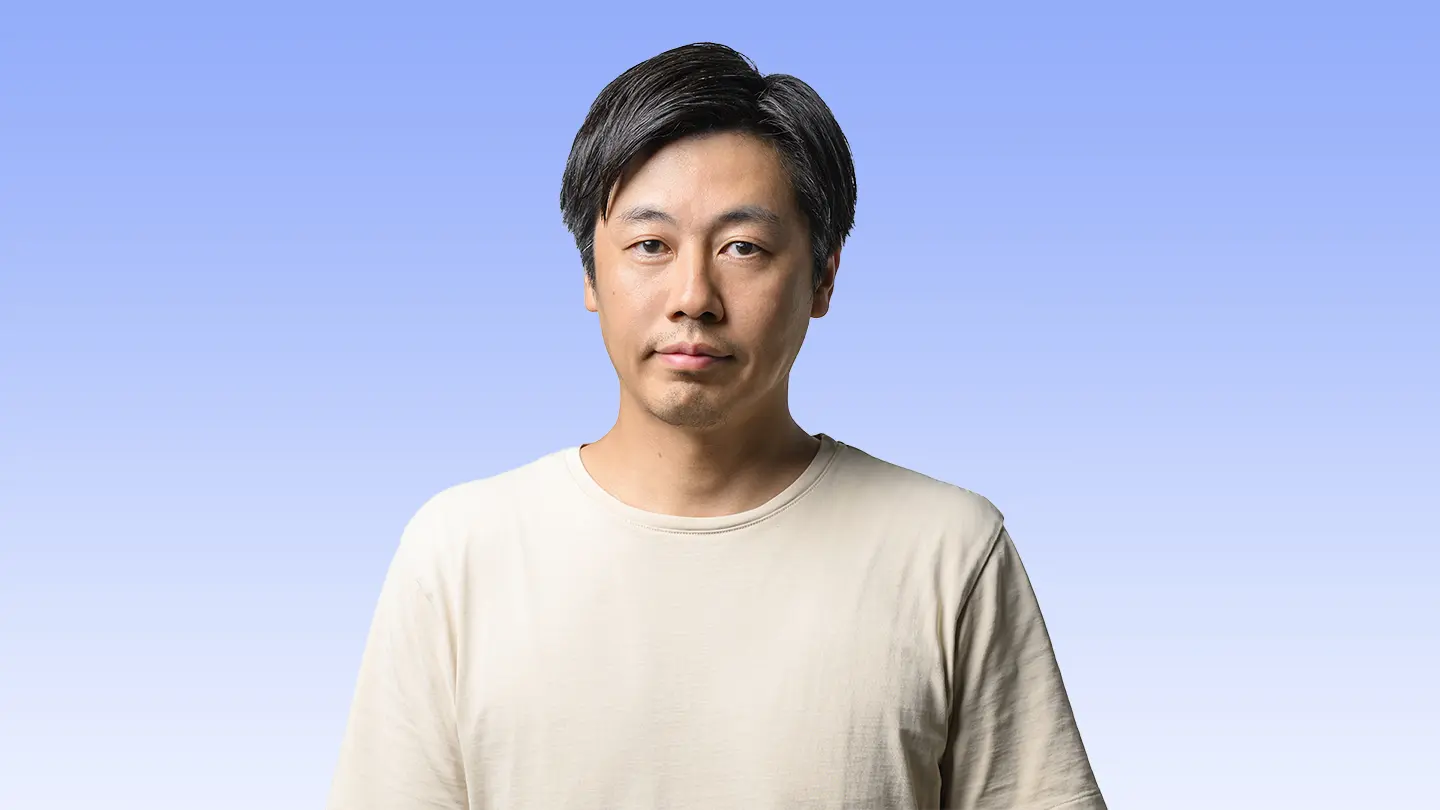
Director Yasuhito Sekine leads the exploration of space and life. Through the comprehensive supervision of JOURNEY TO LIFE at the Mitsubishi Pavilion for Expo 2025 Osaka, Kansai, Japan, Institute of Science Tokyo (Science Tokyo) will accelerate its future strategy by advancing interdisciplinary research and societal contribution as part of its cross-disciplinary research framework, Visionary Initiatives (VIs), while translating cutting-edge research into social impact.
How did you come to be asked to serve as overall supervisor of the Mitsubishi Pavilion at Expo 2025 Osaka, Kansai, Japan?
I am engaged in international research on the origin of life and the search for extraterrestrial life. As a researcher with academic expertise in exploring the solar system, including Mars and the moons of Jupiter, my work was highly compatible with the pavilion's theme, "The Beginning and Future of Life." As a result, the production team at the Mitsubishi Pavilion shared with me their vision of portraying a grand journey from the deep sea to outer space, grounded in scientific evidence, and asked me to serve as academic supervisor. On a personal note, the sense of wonder toward science and the unknown that I experienced as a child at Expo 1985 Tsukuba sparked my aspiration to become a researcher. I believed that participating in Expo 2025 would be a golden opportunity to pass on that formative experience to the next generation, so I accepted the role of overall supervisor.
How does your research in astrobiology connect with JOURNEY TO LIFE at the Mitsubishi Pavilion?
Astrobiology is an interdisciplinary field of research that explores the existence, origin, and evolution of life in the universe. It integrates planetary science, Earth science, and biology to explore one of humanity's most fundamental questions: Where did life come from, and where is it headed? JOURNEY TO LIFE is a project that allows visitors to experience this question firsthand. The exhibition begins in the deep sea and takes visitors on a 75-million-kilometer journey that traces the origin and evolution of life on Earth and leads to a future vision of humanity's expansion into space. This narrative structure aligns perfectly with the grand framework of life's history as depicted in astrobiology. The elements of this story — such as the hypothesis of life originating at deep-sea hydrothermal vents, the possibility of life on Mars and Jupiter's moon Europa, and humanity's expansion to Mars — are central to my field of research. In other words, JOURNEY TO LIFE is designed as a socially implemented academic outreach initiative that conveys the latest insights of astrobiology to the general public in an accessible and inspiring way.
What role and academic significance does astrobiology play within the Visionary Initiatives (VIs)?
Within VIs, I am in charge of Space Innovation, where I explore the significance of humanity's expansion into space through the development of space habitats and the search for extraterrestrial life. I believe these activities will be an essential pillar from the perspectives of expanding international collaborative research, promoting interdisciplinary collaboration, and nurturing the next generation of researchers. Furthermore, such scientific advances enrich people's values and worldviews, contributing to greater intellectual and cultural well-being. Deepening our understanding of life's diversity provides an opportunity to reaffirm the importance of conserving biodiversity on Earth and contributes to building a sustainable society. Furthermore, as the global environment changes rapidly, space exploration and development serve as strategies for expanding humanity's survivability while also providing new perspectives and technologies to help protect Earth's environment. As a discipline that bridges these two domains, astrobiology offers profound insights for future society.
Following the university merger in October 2024, how has the addition of the fields of medicine and dentistry impacted your research and perspective on civilization?
It has been a huge positive. Until now, astrobiology has developed by integrating the four scientific fields of physics, chemistry, biology, and Earth science. However, humanity is now entering a stage where we will expand into extraterrestrial environments such as Mars, living there and building new forms of society. An essential theme in this process will be "space humanity." Life in space requires humans to maintain their health and adaptability under harsh conditions such as low gravity, a thin atmosphere, and exposure to cosmic radiation. There is also the possibility of new evolutionary or physiological changes, making knowledge from medicine and dentistry indispensable. Furthermore, building a space society requires a liberal arts perspective, and the convergence science made possible by the university merger will provide strong support for exploring this new frontier.

What do you think are the factors behind the growing interest in space exploration and space science today?
On a technological level, we are building a foundation for sustainable living that moves away from petroleum dependence, such as through the realization of a resource-circulating hydrogen society. On a psychological level, issues such as global warming and resource constraints are creating a sense of stagnation among people, and there is a growing desire to explore new frontiers. However, it is a misconception to view space as a utopia. Life on Mars or the Moon will not be free; rather, it will involve communal living in cramped, restrictive environments. The "frontier spirit" that emerges in such an environment will be crucial. It will also be essential to build a society that discovers new values and meaning in life even within limited environments.
How does the "frontier spirit," which is essential for space exploration, relate to sustainability, the SDGs, and the concepts of a "better future" and a "better universe"?
Although sustainability is essential, its implementation can sometimes create tension with human freedom and fundamental human rights, leading to a sense of stagnation. Space could offer an opportunity to break through this sense of stagnation. Life in space is full of constraints, so mutual assistance, shared roles, and a sense of community become essential. This will give rise to a new social philosophy that can also be applied to society on Earth. This can be seen as a form of human evolution that goes beyond sustainability. Furthermore, a "better universe" does not mean improving space itself, but rather refers to a state in which the exploration of space contributes to making Earth a better place. Mutual assistance is indispensable for living on Mars or the Moon, and this philosophy will inevitably be reflected back on Earth. Although society in space will begin with extremely small communities, such experiences may serve as opportunities to expand humanity's sense of communal limits. If a sense of cooperation and compassion spreads on a global scale, that will represent the true meaning of a "better future" and a "better universe."
How will you apply your research and experience to education, next-generation development, and collaboration with the local community?
Through my experience at the Expo, I developed a methodology for communicating scientific knowledge to the general public through storytelling. I would like to apply this experience to education and create opportunities for students to consider the social significance of science. Beyond regular classes, I aim to hold public discussions such as the Cosmos Salon two or three times a year and expand opportunities for dialogue both on and off campus that include participation from businesses and the general public. For children, it is crucial to offer immersive, 360-degree experiences that cannot be gained from videos or books alone. By actively offering programs such as planetarium presentations, experiment events, and hands-on workshops that parents can also enjoy, we can encourage continued participation and gain support from the local community. A university's value within the local community is enhanced not only by cutting-edge research and startup creation but also by activities that spark curiosity about science and the future.

As you work on such grand research themes, do you have any methods for generating ideas, thinking creatively, or refreshing your mind?
The most important aspect of research is discussion. Engaging in dialogue with researchers from other fields generates ideas that one could never arrive at alone. In addition, it is essential to spend time alone digesting and reflecting on those ideas. I use my commuting time for thinking and writing. I do not mind the hustle and bustle during my commute; in fact, it helps me concentrate. In addition to discussions with others, having time alone for reflection creates a two-pronged approach that is key to deepening ideas and refreshing the mind.
If you could actually travel to space, where would you go and what would you like to do?
If I could go there and back immediately, I would like to visit Saturn. Of course, I would like to see the giant rings up close. Its moons have also been the focus of my research for more than 10 years. I would like to see Saturn's magnificent rings, which exceed Earth in diameter, and the moons that orbit them with my own eyes.
Profile
Yasuhito Sekine
Director, Earth-Life Science Institute
Professor, Institute of Future Science
Yasuhito Sekine's research area is planetary science and astrobiology. He serves as the Program Director for the Space Innovation VI.
Related articles
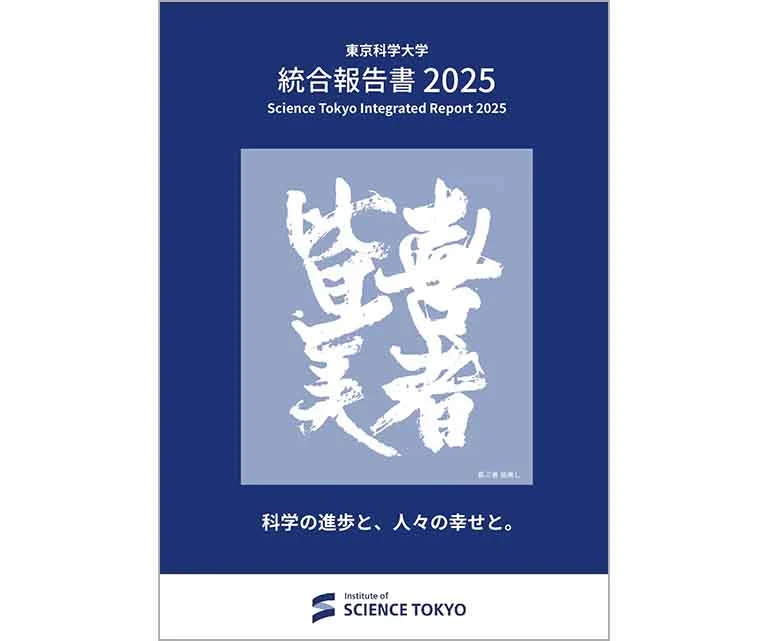
Integrated Report 2025
In addition to financial data, the Integrated Report provides a comprehensive overview of Science Tokyo’s contributions to society, governance, and non-financial information for its stakeholders. The report describes the Institute’s education, research, social initiatives, and management strategies, while charting a course towards further progress.
Interview held on July 16, 2025