Before bones form: uncovering the mystery of Sox9, the master regulator of cartilage development
Tracking the development of mouse limbs reveals how Sox9 switches its genetic targets
What the research is about
The arms and legs of a developing baby do not start out as hard bones. Instead, they begin as soft cartilage templates that gradually transform into bone. The shapes of our fingers, knees, and even parts of our ears all originate from cartilage.
At the center of this process is a transcription factor called Sox9. Transcription factors act like molecular conductors, deciding which genes are turned on and off inside cells.
Previous studies had already shown that Sox9 is essential for cartilage formation. In fact, when Sox9 is removed from developing mouse limbs, cartilage fails to form altogether.
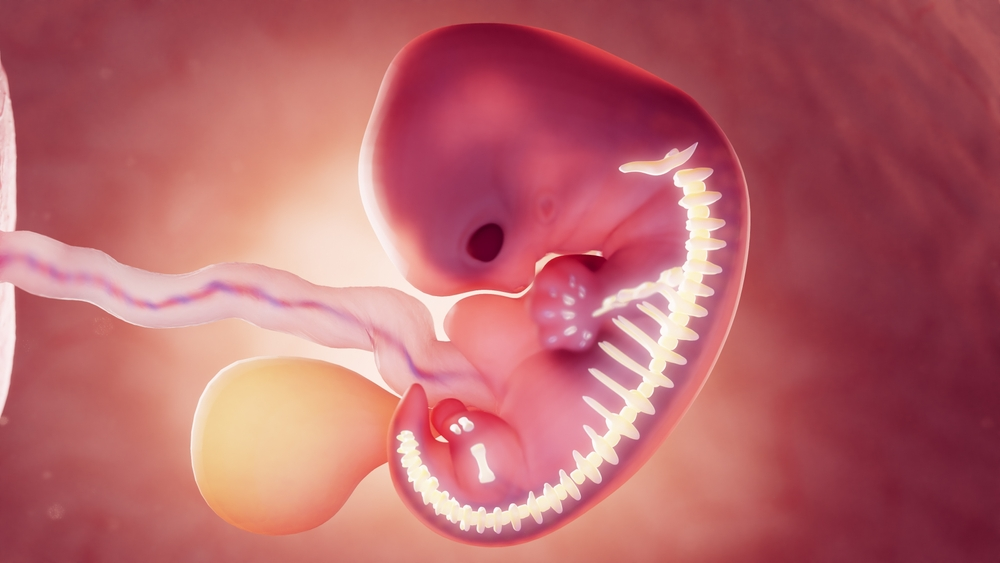
In recent years, advances in technologies that analyze cells one by one have revealed that developing tissues contain many different cell types and cell states. Even cells that appear similar at first glance can have very different roles and developmental fates. However, researchers still did not know exactly when Sox9 acts, in which cells it acts, and which genes it controls at different stages of development.
To answer these questions, a research team led by Professor Hiroshi Asahara, Assistant Professor Yutaro Uchida, and graduate student Masayasu Sega at Institute of Science Tokyo (Science Tokyo) performed a detailed time-series analysis of the early stages of limb development in mouse embryos.
Why this matters
One of the major challenges was that developing limbs contain a mixture of cells at different stages of maturation. Some cells are already becoming cartilage, while others are still preparing for that transition. Because of this complexity, conventional methods could not clearly distinguish how Sox9 functions in individual cell populations.
The researchers therefore combined recently developed high-precision analytical approaches to examine, in unprecedented detail, which genes Sox9 interacts with. These methods reduced background noise and enabled accurate analysis even from small numbers of cells.
As a result, the team identified four distinct groups of cells in which Sox9 is particularly active. They also discovered that these groups follow different developmental routes before ultimately becoming mature cartilage cells.
Perhaps most surprisingly, Sox9 does not perform the same task throughout development. Early in development, Sox9 regulates genes involved in establishing the boundaries that shape developing limbs. At later stages, it shifts its focus to genes that promote cell growth and differentiation. In mature cartilage cells, it consistently activates genes responsible for producing cartilage components.
In other words, Sox9 is not simply giving a single instruction to “make cartilage.” Instead, it flexibly changes the combination of genes it controls depending on developmental timing and the state of the cell.
This study provides the first comprehensive view of how Sox9 uses different genetic programs in different cell types over time. By visualizing these dynamic changes, the researchers have revealed the principles governing cartilage formation at an unprecedented level of detail.
What’s next
The findings provide an important foundation for understanding how bones and joints are formed during development. They may also contribute to future research on congenital disorders in which cartilage does not develop normally, as well as studies aimed at repairing cartilage damaged by injury or aging.
In the future, these discoveries could support advances in regenerative medicine, including the generation of cartilage in the laboratory and a deeper understanding of skeletal disorders. The detailed map of when and where Sox9 acts during cartilage development will serve as a valuable resource for future cartilage and regenerative medicine research.
Comment from the researchers
What fascinated us was discovering that the same regulator, Sox9, changes its genetic ”conversation partners“ depending on the developmental stage and the type of cell. We were able to capture this dynamic behavior by combining single-cell gene expression analysis with CUT&Tag, a powerful technique that can detect the activity of transcription factors from a very small number of cells. Seeing the behavior of individual cells come into focus with such clarity was incredibly exciting. I hope this research helps people appreciate the remarkable complexity behind how our bodies take shape.
(Yutaro Uchida, Assistant Professor, Department of Systems BioMedicine, Graduate School of Medical and Dental Sciences, Institute of Science Tokyo)

Life is not built mechanically according to a fixed blueprint. The same genes can take on different roles depending on time and place, working together to create a highly sophisticated body. By combining single-cell gene expression analysis with state-of-the-art transcriptional network analysis, we were able to reveal these dynamic rules with unprecedented resolution. Understanding how development works is important not only for regenerative medicine and disease research, but also for addressing one of the most fundamental questions in biology: what is life?
(Hiroshi Asahara, Professor, Department of Systems BioMedicine, Graduate School of Medical and Dental Sciences, Institute of Science Tokyo)

Dive deeper
Explore more research in Science for All
Science for All showcases cutting-edge research at Science Tokyo and highlights the ideas, people, and possibilities shaping the future.

Contact
Research Support Service Desk