【Event Report】 Online Exchange Sessions with KTH Royal Institute of Technology
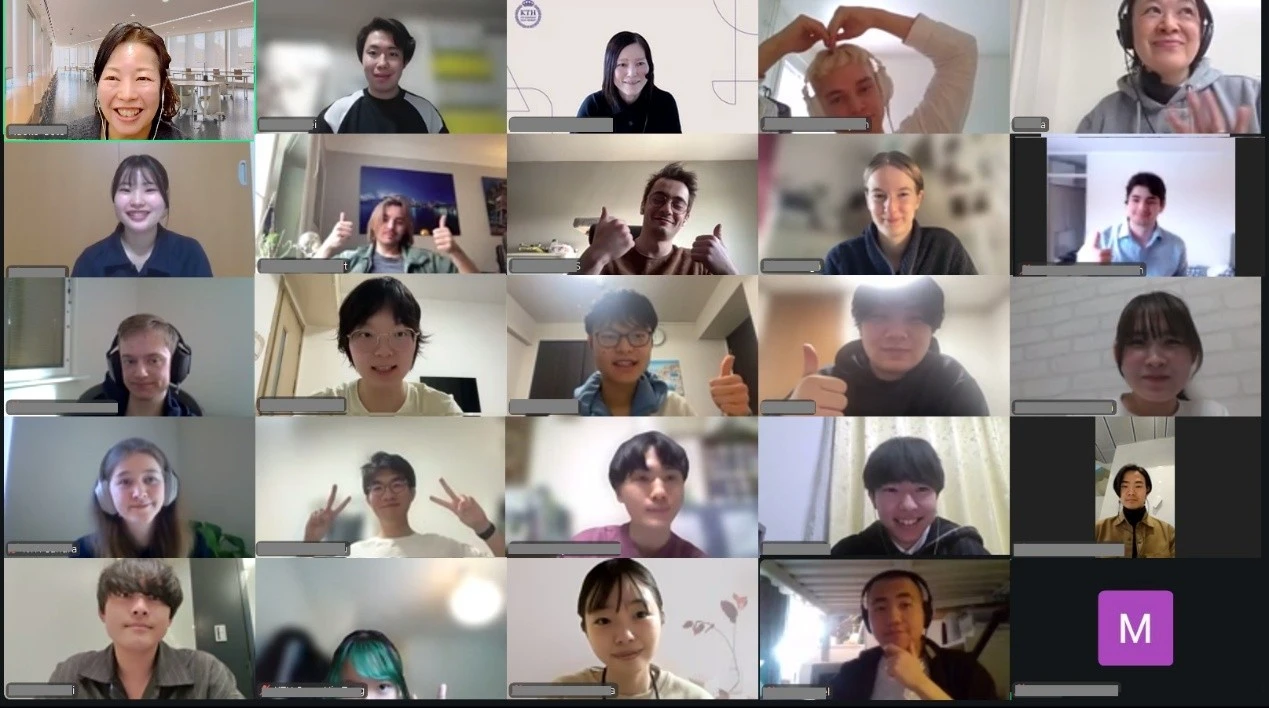
The Global Education Section at the Center for Entrepreneurship Education held two online exchange sessions with students from KTH Royal Institute of Technology in Sweden. KTH is the largest science and engineering university in Sweden. Science Tokyo and KTH have a tuition‑waiver student exchange agreement, making both universities popular study‑abroad destinations for each other’s students.
Every summer, The Global Education Section organizes a two‑week overseas training program. This exchange session was made possible through the connection with Japanese language lecturer Dr. Akiko Shirabe at KTH, which the program visits annually.
Students from KTH with about six months to two years of Japanese‑learning experience, as well as Science Tokyo students enrolled in the 4Q intensive course Online Global Practice, participated in the session. In addition, students interested in future study‑abroad opportunities joined the session as part of the CEE‑approved lectures*. Through introducing their campus life, practicing Japanese and English, and discussing unique expressions and cultural backgrounds, the participants deepened their mutual understanding in a friendly atmosphere.
*Center for Entrepreneurship Education (CEE) offers “ENT.B211: Science, Technology, Culture, Society, and Innovation 1” (1 credit) for undergraduate students enrolling in 2024 or later to expand opportunities for entrepreneurship education. This course allows students to earn the credit by participating in following activities designated as “CEE-approved lectures.”
CEE designates on-campus activities which contribute to broad-based entrepreneurship education, such as lectures, seminars, and workshops as CEE-approved lectures. Students can receive one “Entre Point” after joining a CEE-approved lecture for 50 minutes and students who accumulate 14 Entre Points can earn the credit for the course above.
◇Session Overview
Session 1: February 12 (Thu), via Zoom, Participants: KTH 8, Science Tokyo 18
Session 2: February 19 (Thu), via Zoom, Participants: KTH 8, Science Tokyo 14
Duration: 1 hour 30 minutes each
◇ February 12 Session
■Activity 1: Themed Breakout Rooms
Participants freely discussed five themes:
“Student Life (KTH/Science Tokyo),” “J‑pop & Anime,” “Games,” “Food,” and “Recommended Spots in Japan & Sweden.”
Students from both universities were mixed in each room, and conversations expanded naturally from their favorite points within each theme.
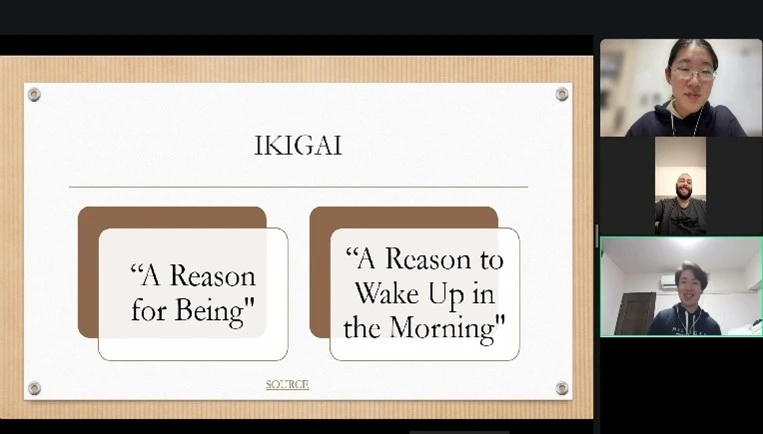
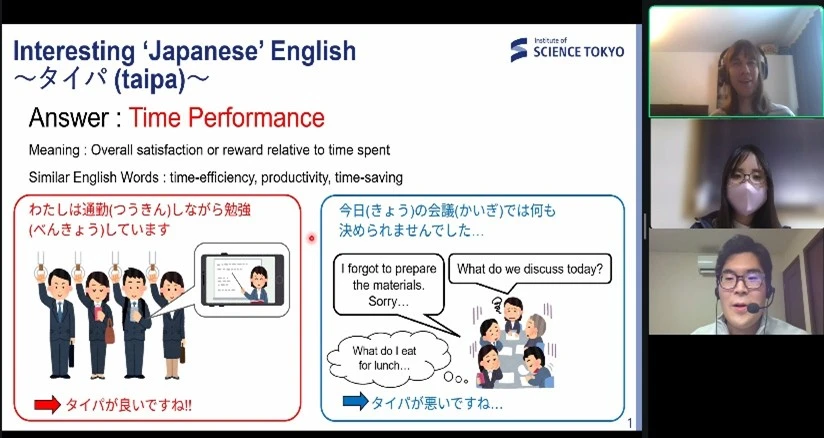
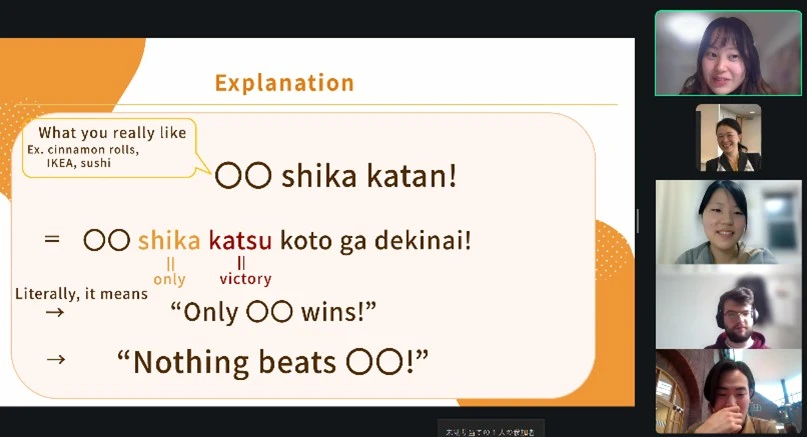
■Activity 2: Everyday Japanese Expressions & Cultural Communication Styles
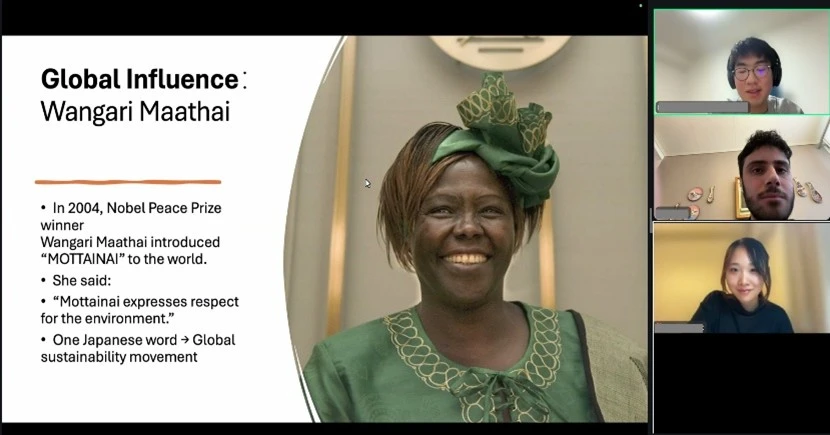
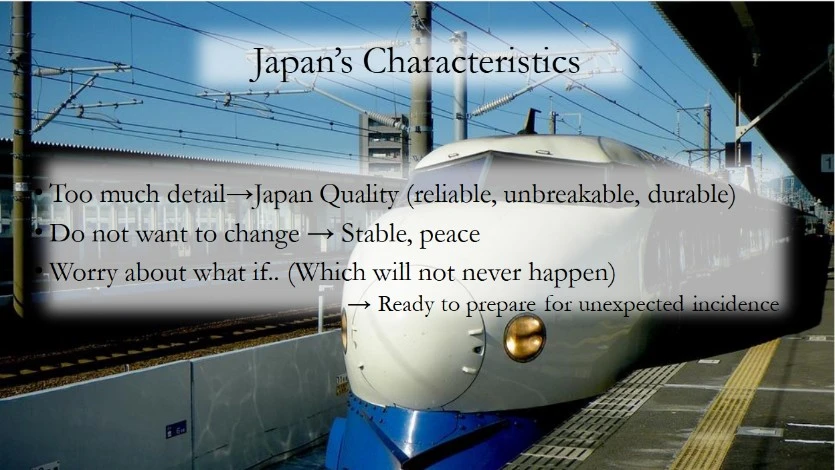
After learning from Dr. Shirabe about the differences between low‑context cultures (which prefer explicit communication) and high‑context cultures (which rely on implicit meaning), Scicnce Tokyo students introduced practical Japanese expressions that are rarely found in textbooks.
Participants discussed similarities with their own languages, situations where the expressions could be used, and practiced them through role‑play. Each group then shared their discoveries, challenges, and interesting points.
◇February 19 Session
■Activity 1: “Color and Culture” Game
As an icebreaker, each group selected a color and sketched items associated with it within one minute. They then explained their drawings and the cultural background behind them.
Example: For the color red, a student drew a “baby” and explained the origin of the word akachan (“baby”)
Talking about culture through colors and imagery helped relax the atmosphere and reveal diverse perspectives.
■Activity 2: Exploring “Intercultural Communication”
After watching a short video depicting an interaction between a Japanese person and a foreigner, participants discussed in breakout rooms:
・Why misunderstandings occurred (word choice, tone, attitude)
・Cultural reasons behind Japanese communication styles (consideration, hierarchy)
・How they themselves would respond
・Strategies for better communication (clarifying expectations, etc.)
After the session, an optional free‑talk room was opened for casual conversation by theme.
◇ Participant Voices (Selected)
“I used to get nervous during group work, but this time I took the initiative as a ‘first penguin.’ Asking questions and raising points helped energize the discussion, and I felt real growth.”
“I was surprised by how good everyone’s Japanese was. I also learned that when Japanese people don’t speak much, it doesn’t mean they aren’t thinking—there’s a lot going on internally. It was fascinating to see how cultural differences extend to such subtle areas.”
“I used to think foreigners were always friendly and assertive, but I learned that Swedish people also worry about hurting others’ feelings. It made me feel closer to them.”
“I realized how important daylight is in Sweden and how people value it. Being able to finish work on time and go home at 17:00 sounded amazing. It made me want to live or study in Sweden even more.”
“It was interesting to hear that Swedish people and Japanese people are similarly timid and avoidant of conflicts!”
“It is important to ask for clarification if you do not understand. And that sometimes even Japanese people prefer if it is more concrete.”
“The discussions were great. The main difficulty I had was speaking Japanese because my vocabulary is limited.”
“I really liked the activity where I got to learn new Japanese words and phrases.”
Contact
Global Education Section,
Center for Entrepreneurship Education