Shota Kaneda wins men’s individual category at 58th All-Japan Intercollegiate Taido Championships
Shota Kaneda, a 3rd-year student in the Faculty of Dentistry and a member of the Science Tokyo Taido Club, has won the men’s individual hokei category at the 58th All-Japan Intercollegiate Taido Championships, held on October 5 at the Saitama Prefectural Budokan.
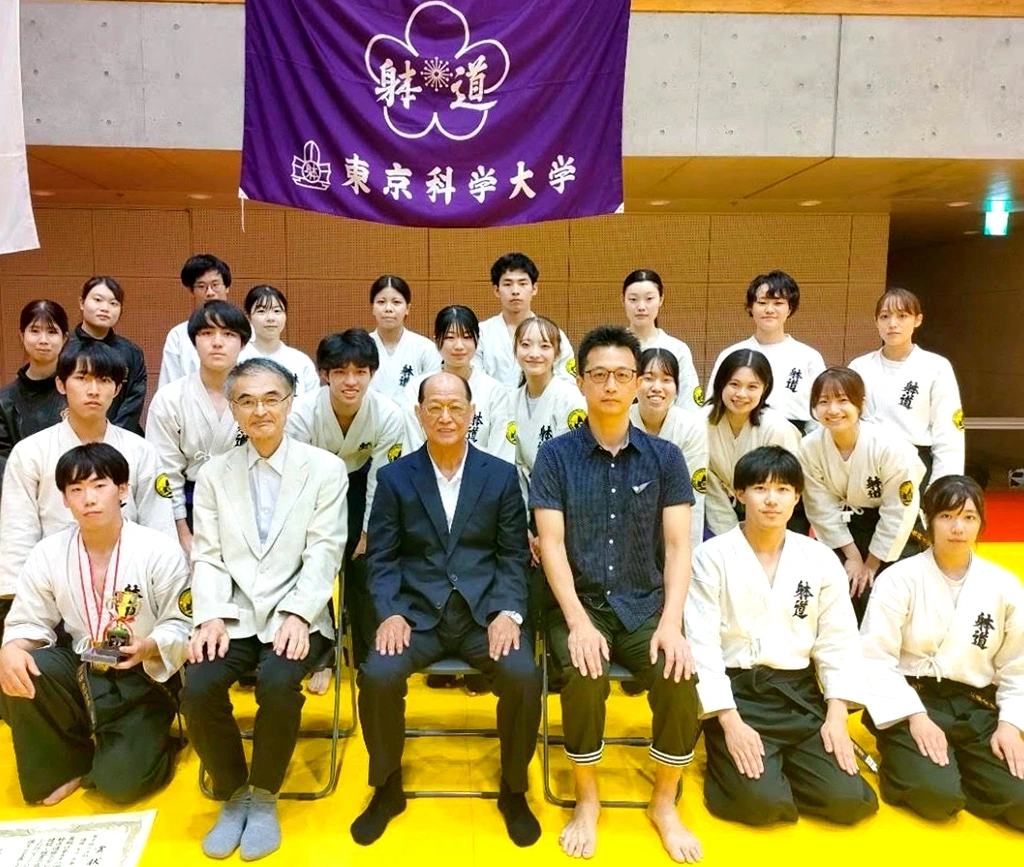
The club last won the event 22 years ago when it was still known as the Tokyo Medical and Dental University Taido Club. Science Tokyo Taido Club is now an official student club of the Institute.
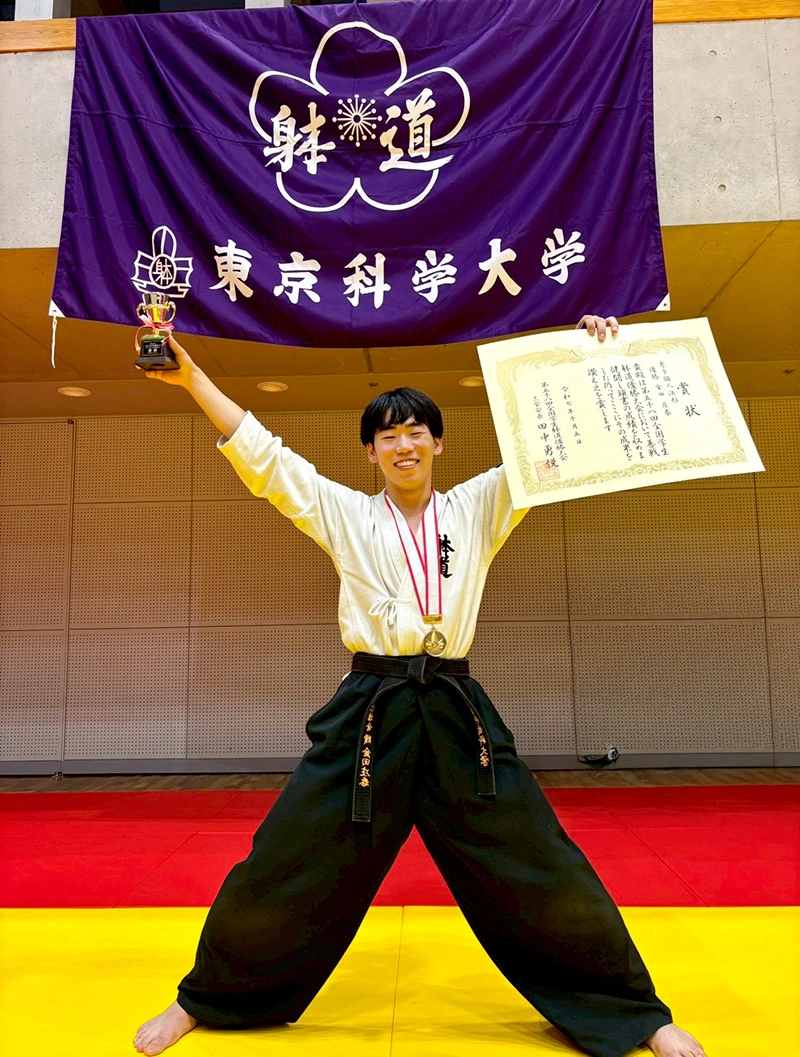
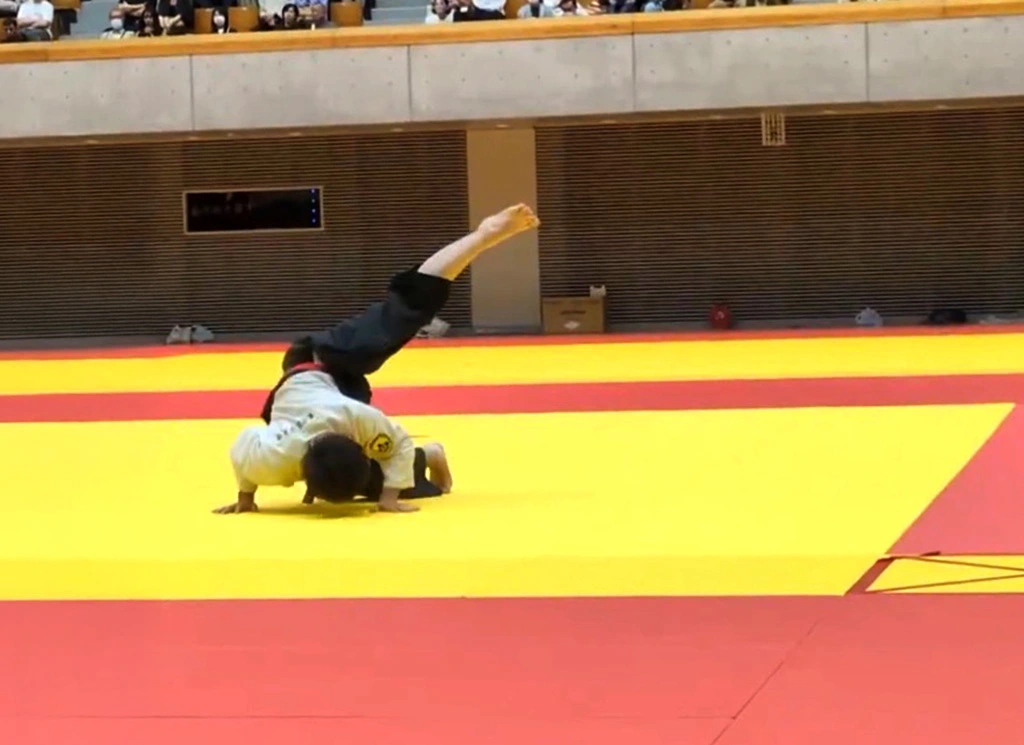
Throughout the tournament, Kaneda won many matches by narrow 2-1 decisions, but he delivered a flawless performance in the final, securing the championship with a decisive 3-0 victory.
The 58th All-Japan Intercollegiate Taido Championships marked the debut for the Science Tokyo Taido Club after the birth of the Institute in October 2024.
Comments from Shota Kaneda
Although hokei is just one competition category, I am extremely pleased to have achieved a strong result at this tournament.
I am deeply grateful to the mentors and senior students who have guided me so far. On the day of the tournament, the support from all the club members provided me with tremendous encouragement. The cheers from members of other universities, whom I have met through past exchanges, also gave me a great boost.
Starting in November, I will take over as captain of the Science Tokyo Taido Club. While I have served as vice-captain until now, I feel that the captain position demands an even higher level of commitment. I will strive diligently to support the entire club as we work together to elevate our skills.
Personally, I intend to continue practicing not only for individual hokei competitions like this one, but also for jissen sparring and team competitions, aiming to grow even further.
We kindly ask for your warm support for the Science Tokyo Taido Club.
What is taido?
With its roots in Okinawan karate, taido was created by Seiken Shukumine and presented to the public in 1965. The martial art aims to teach how to succeed in society and respond creatively to one’s challenges or situations through physical and mental exercise.
Taido techniques are based on dynamic body movements as opposed to punches and kicks delivered from a static stance. These movements include tilting the body axis to avoid attacks while simultaneously generating energy for a counterattack. Taido footwork allows practitioners to adjust distance and angle to the opponent, and is functionally connected to the techniques from a mechanical point of view. Gymnastic moves are used to complement the two-dimensional footwork and enable movement in a three-dimensional space.
Competitive taido includes three categories — hokei (form), jissen (fight) and tenkai (development). Hokei and jissen are both performed individually and in teams, while tenkai is performed with one leading “hero” fighting five opponents in a rehearsed scenario.