Global Leadership Practice 2026: Developing Leadership Through Cross-Cultural Learning
The Office of Global Education at the Center for Entrepreneurship Education offered the intensive course "Global Leadership Practice (ENT.L457)" from June 9 to June 26, 2026. Of the ten class sessions, the first six were conducted online and the remaining four were held in person. The course was taught by Stacey Doremus, Director of the Leadership Education and Development at the Georgia Institute of Technology (Georgia Tech) in Atlanta, Georgia, USA.
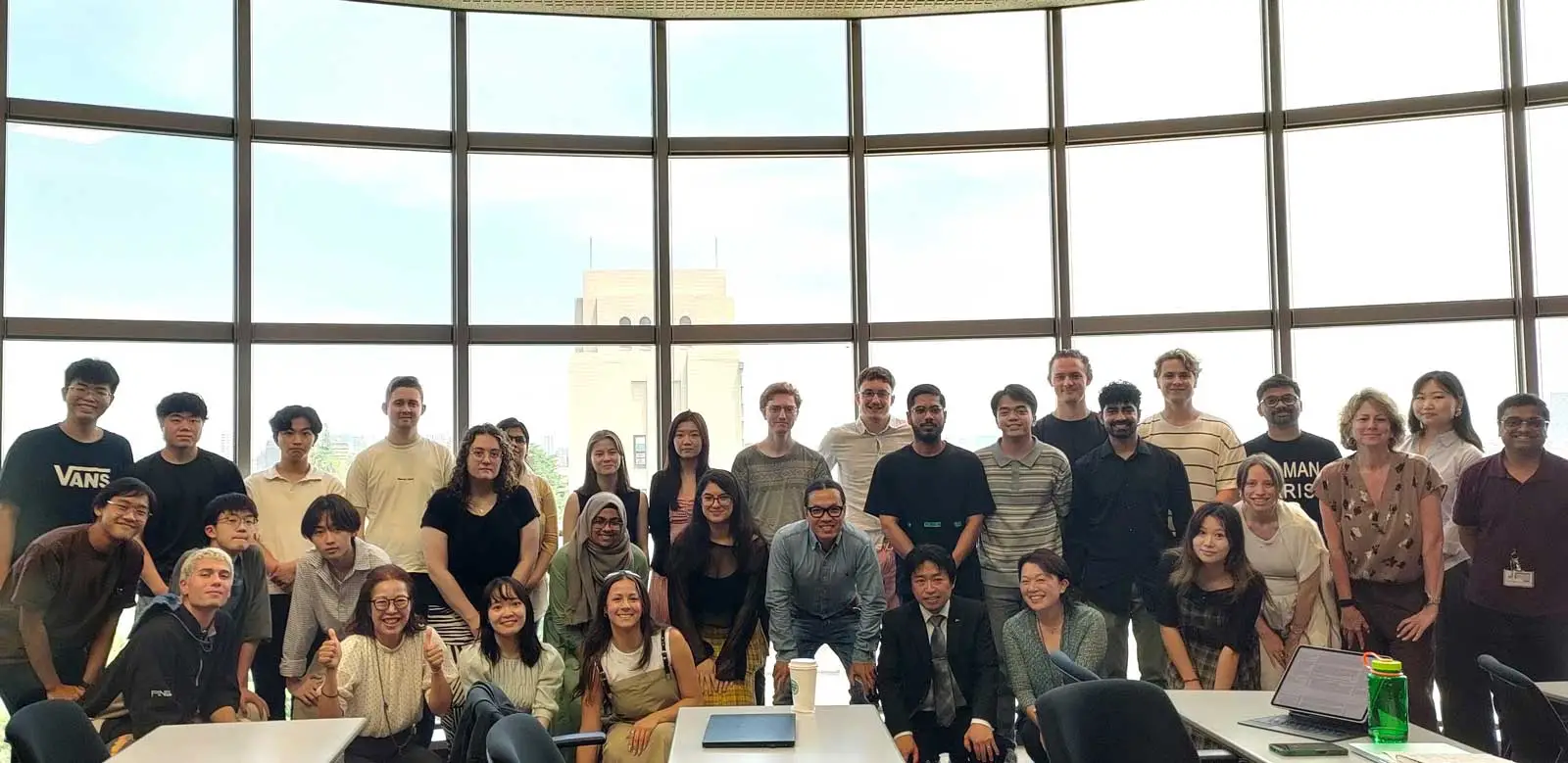
First launched in 2018, the course was offered for the ninth time this year and attracted 23 students. Students actively engaged in group discussions and collaborative activities throughout the program. Through workshops, case studies, discussions, and self-reflection exercises, participants learned the key elements of leadership required to achieve goals while recognizing their own values and those of others in a global environment.
Participants from Diverse Backgrounds
The course brought together students from a wide range of countries and regions. The 23 participants included students from Japan (4), Sweden (3), China (2), France (2), India (2), Singapore (2), Germany (1), Hong Kong (1), Israel (1), Mongolia (1), Pakistan (1), the Philippines (1), Turkey (1), and Bangladesh (1).The instructor was from the United States, while guest speakers included a Vietnamese alumnus and a Japanese alumnus of the university. Many of the Japanese students had studied abroad previously or hoped to do so in the future. Through discussions and group work with classmates from different cultural backgrounds, students actively exchanged ideas and perspectives beyond national and cultural boundaries.
Sessions Focused on Active Learning
The course was developed based on leadership education practices at Georgia Tech and has continued to evolve through feedback from participants over the past eight offerings.
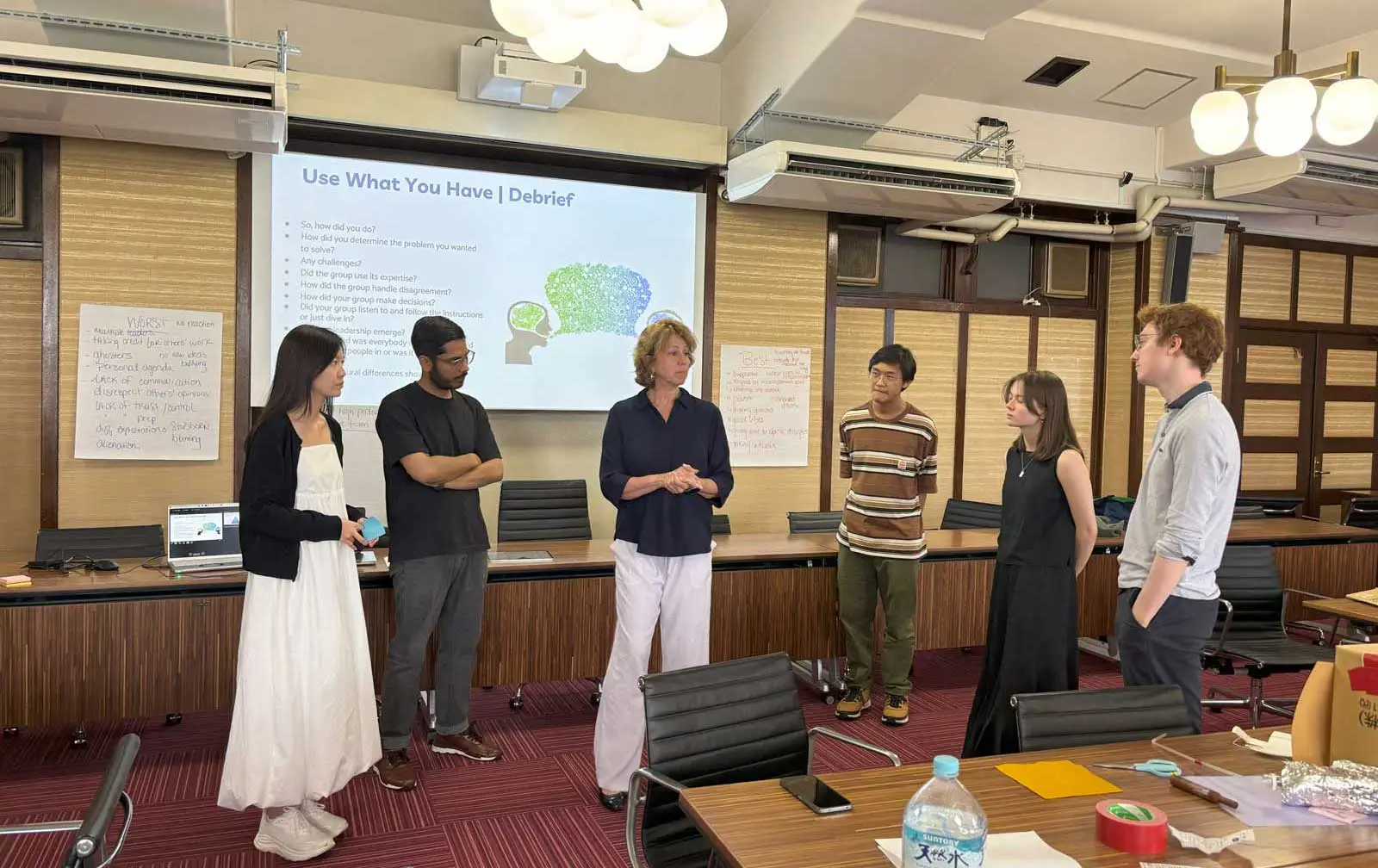
As in many American-style university courses, students were expected to complete extensive preparation and actively participate in class discussions. Before the course began, participants were required to read two books on leadership and submit essays related to leadership and teamwork.
Students also attended an online orientation session before the start of the course and received a detailed handbook summarizing the key points and assignments for all ten sessions. By reviewing the course expectations in advance, students, including those less experienced in discussion-based learning environments, were able to participate confidently in group work and class discussions.
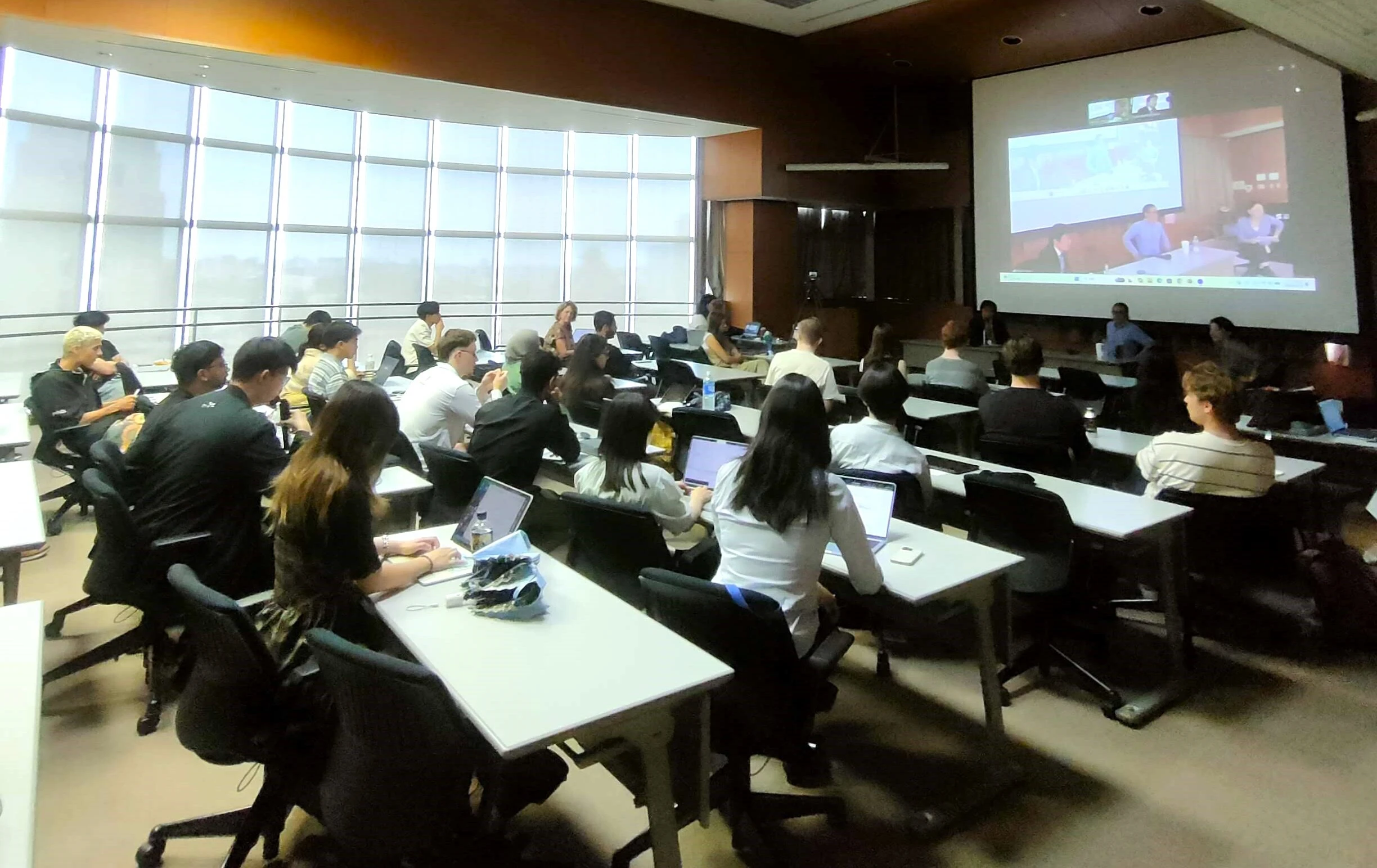
All classes were conducted in English. During the online sessions, the interactive learning platform Pear Deck was used to encourage participation. Students shared their thoughts in response to prompts and questions posed by the instructor, and their responses were displayed and discussed throughout the class. During breaks, participants introduced popular music from their home countries, creating additional opportunities for intercultural exchange.
Prior to the in-person sessions, students also participated in a values-sharing activity designed to deepen mutual understanding among classmates from diverse cultural backgrounds. Using a set of 100 value cards, participants identified and shared the values they considered most important, encouraging reflection on personal beliefs and cultural perspectives.
Learning in Multicultural Teams
The second half of the course focused on teamwork and collaboration. Students examined how teams can achieve goals by leveraging the unique strengths and talents of individual members. Working with classmates from different cultural and academic backgrounds, they developed skills in problem solving, coordination, and cooperation.
As a hands-on exercise, each team was challenged to create a prototype of an innovative system designed to address global issues using ten different materials, including cardboard and plastic bottles.
Through these activities, students learned practical methods for working toward a shared goal and producing results as a team.
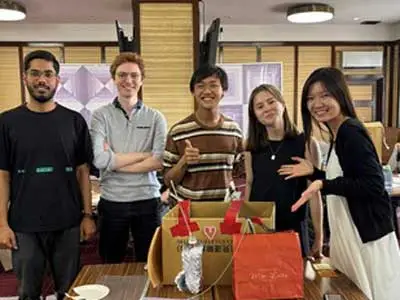
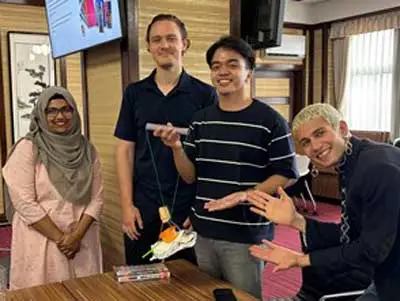
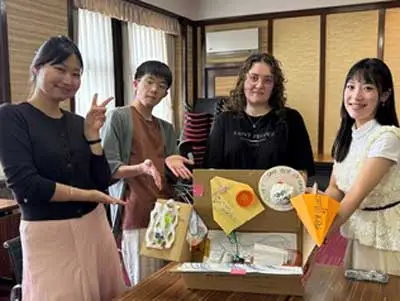
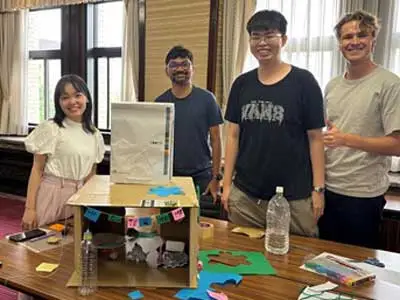
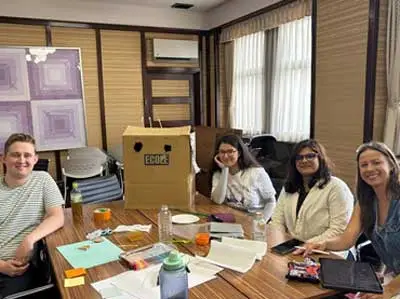
Students also learned about leadership styles in different countries, including egalitarian and hierarchical approaches, while considering the influence of history, culture, and social customs. They explored how decision-making processes and relationships between leaders and team members vary across cultures and developed a deeper understanding of both conscious and unconscious biases that may arise in multicultural settings.
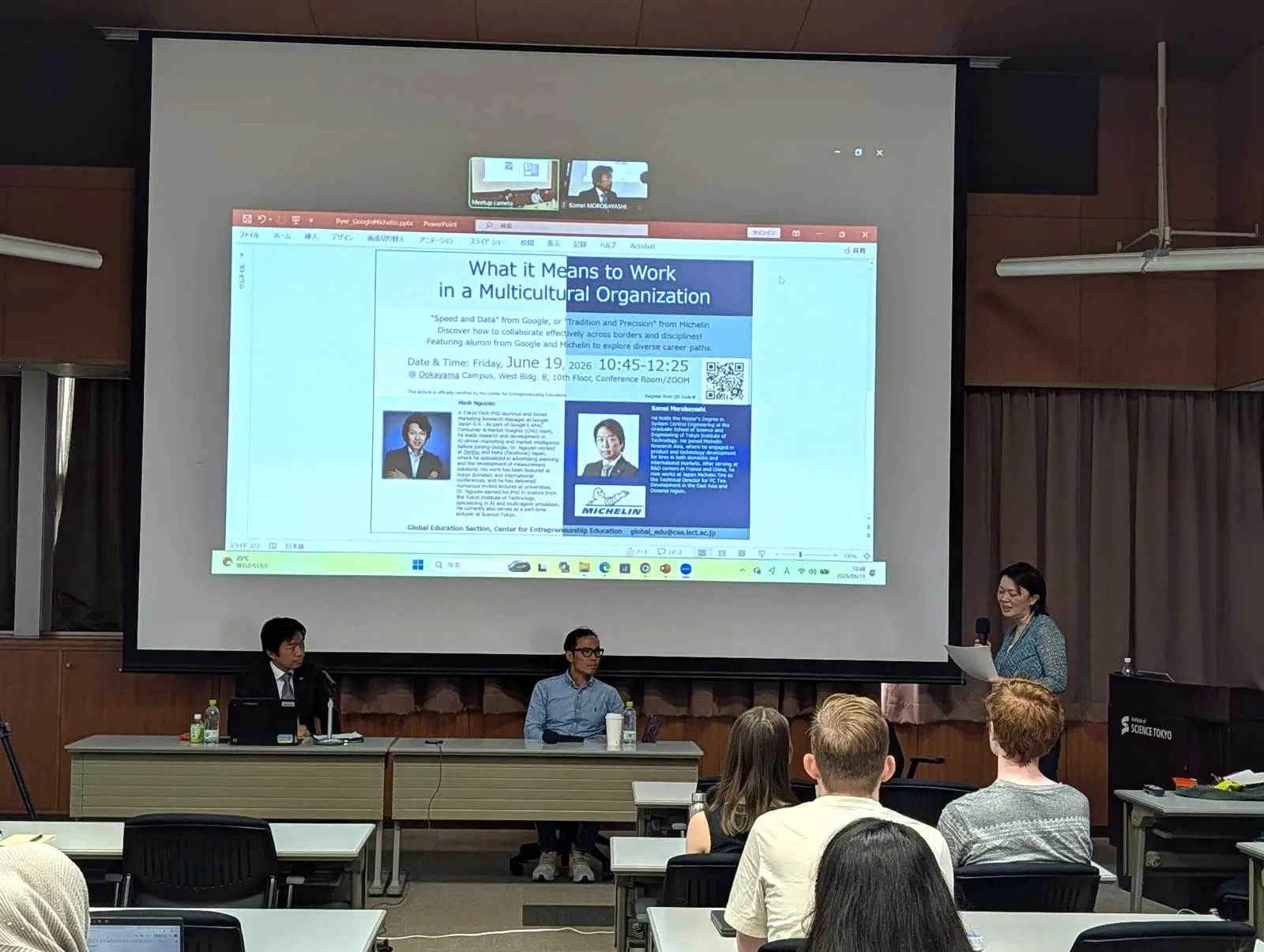
The multicultural team-building sessions featured two guest speakers: Dr. Minh Nguyen, a university alumnus currently working at Google Japan G.K., and Komei Morobayashi from Michelin Japan Ltd.. Drawing on their professional experiences, they compared Japanese and global corporate cultures, shared examples of AI applications in business, and offered advice on how individuals can maximize their strengths and achieve their goals in diverse environments.
Final Presentation Session
On the final day of the course, six groups presented the results of case studies analyzing two internationally recognized leaders and one leader familiar to the group members. Students explored differences in leadership styles and discussed the qualities necessary for effective leadership.
The leaders selected for analysis included:
Masayoshi Son, Founder and CEO of SoftBank Group
George Washington, First President of the United States
Hajime Moriyasu, Head Coach of Japan's National Soccer Team
Masao Yoshida, former Director of the Fukushima Daiichi Nuclear Power Station
Hayao Miyazaki, animation director
Ngozi Okonjo-Iweala, Director-General of the World Trade Organization and the first woman and first African to hold the position
Based on their research, students proposed organizational systems and management approaches that could function effectively in multicultural environments.
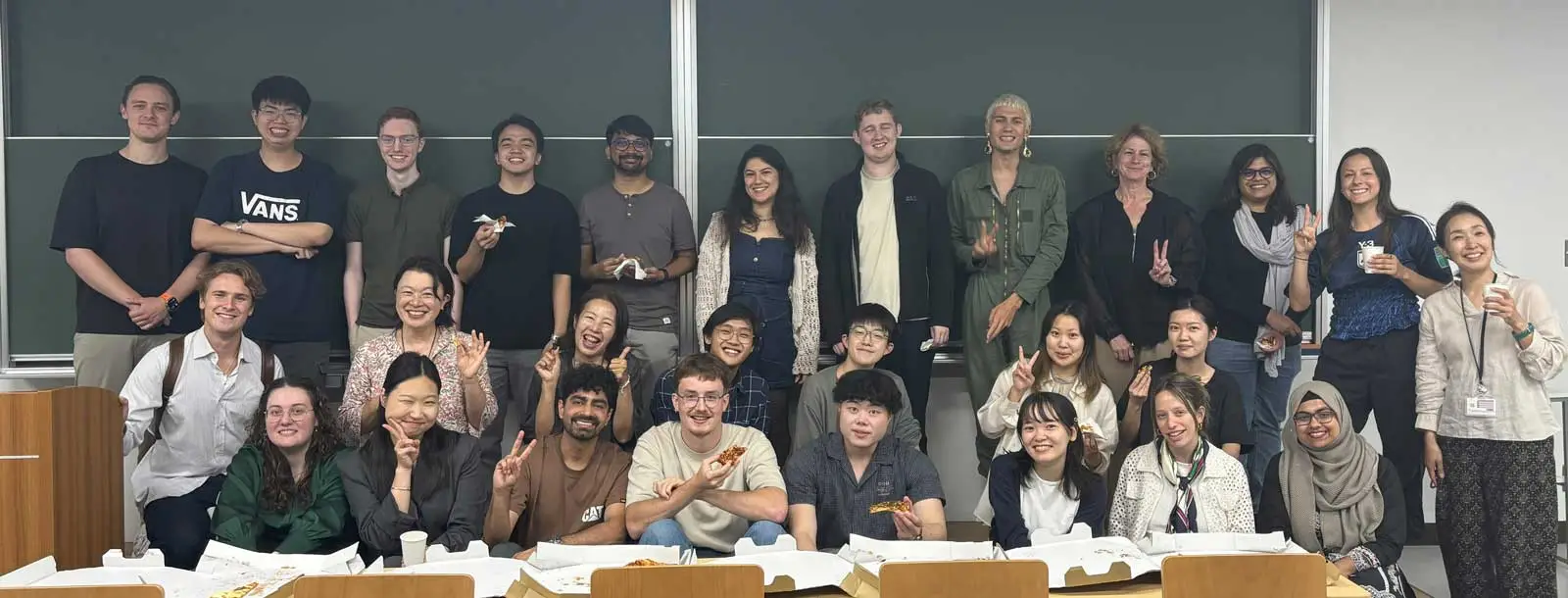
Following the presentations, participants celebrated the completion of the course together and reflected on how they would apply what they had learned to their future careers.
The instructor will continue to provide individualized feedback to each student regarding their learning and personal growth after the course.
Although some students felt nervous when meeting face-to-face for the first time after several weeks of online interaction, they quickly formed strong connections through classroom activities and group projects. By combining online and in-person learning, the course provided valuable experience in international collaboration that transcends geographical boundaries.
The Office of Global Education at the Center for Entrepreneurship Education plans to continue offering the Georgia Tech Leadership Program, a short-term study abroad program in which students spend approximately two weeks at Georgia Tech studying leadership. The next program is scheduled for March 2027.
The Office remains committed to developing practical, internationally oriented educational programs that prepare students to thrive in a wide range of fields, including business, academia, research institutions, and international organizations.
アントレプレナーシップ教育機構 グローバル教育実施室