Can AI find someone who disappears into a crowd?
Combining location and appearance helps AI keep track of people across cameras without additional training
What the research is about
Imagine looking away for just a moment in a crowded shopping mall and suddenly losing sight of a child. You search through the crowd, but cannot find them. In a situation like this, security camera footage showing where the child went could provide an important clue.
But tracking someone with AI is not as easy as it might seem. When a person is hidden by a crowd or a pillar, an AI system can lose track of them. Even when the person comes back into view, the system may fail to recognize them as the same person and start tracking them as someone new.

One possible solution is to use multiple cameras, an approach researchers have already been exploring. More recently, AI-based methods have used large training datasets to learn how to match people across different cameras. However, when the number or placement of cameras changes, these systems may need to be trained or adjusted again for the new setting. This makes them more difficult to deploy.
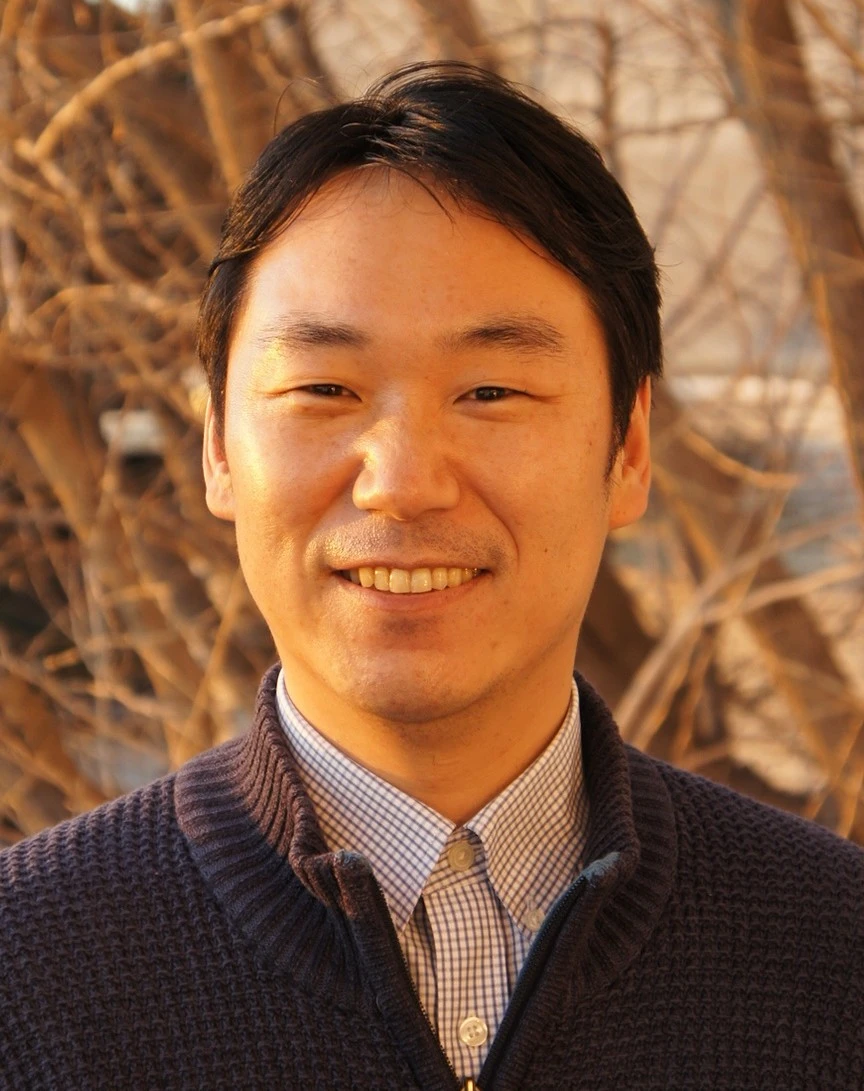
To address this challenge, Professor Masayuki Tanaka and Specially Appointed Professor Masatoshi Okutomi of Institute of Science Tokyo (Science Tokyo), working with Takashi Shibata of NEC Corporation, developed a method that can link the same person across multiple camera views without additional training to learn the relationships between cameras at each new location.
Why this matters
The key to the new approach is combining two clues: where a person should be and what that person looks like.
Imagine two cameras filming the same area from different angles. If a person appears at a certain position in one camera, geometry can be used to estimate where that person should appear in the other camera.
The challenge is how to combine this information with a person's appearance. Rather than treating location and appearance as equally important from the start, the researchers first use the geometric relationship between the cameras to narrow down the possibilities: If this is the same person, where should they appear in the other camera? The system then uses image-recognition AI to compare visual features such as clothing and body shape.
This approach also helps when tracking is interrupted. If one camera loses sight of someone in a crowd, for example, information from another camera can be linked to the earlier record. When the person appears again, the system is therefore less likely to mistake them for someone new and can more easily continue tracking the same individual.
In experiments, combining location and appearance produced better overall tracking performance than using either type of information alone. Even more notably, the method achieved tracking accuracy with only two cameras that was comparable to or better than existing methods using four or five cameras, without requiring additional training to learn how people seen by one camera correspond to those seen by another.
What’s next
If the technology can be used reliably in different environments, it could support searches for lost children and missing persons, crime prevention, and safety management at large events.
At the same time, technology that tracks people through cameras raises important questions about privacy. As such systems become more capable and potentially more widely used, society will need to consider not only how they can improve safety and convenience, but also how personal privacy should be protected.
Comment from the researcher
In an age when AI is increasingly being used in many areas, understanding the basic principles behind how things work is more important than ever. By building on that understanding, we hope to develop applications that make effective use of AI.
(Masayuki Tanaka, Professor, Department of Systems and Control Engineering, School of Engineering, Institute of Science Tokyo)
Dive deeper
Explore more research in Science for All
Science for All showcases cutting-edge research at Science Tokyo and highlights the ideas, people, and possibilities shaping the future.

Follow Science Tokyo research on X
Our Research Frontiers account features selected stories from Science for All and regularly shares research from across Science Tokyo.
Contact
Research Support Service Desk