Harnessing long-wavelength light for sustainable hydrogen production
Novel osmium-based photocatalyst effectively captures long-wavelength visible light, improving solar-to-hydrogen energy conversion efficiency
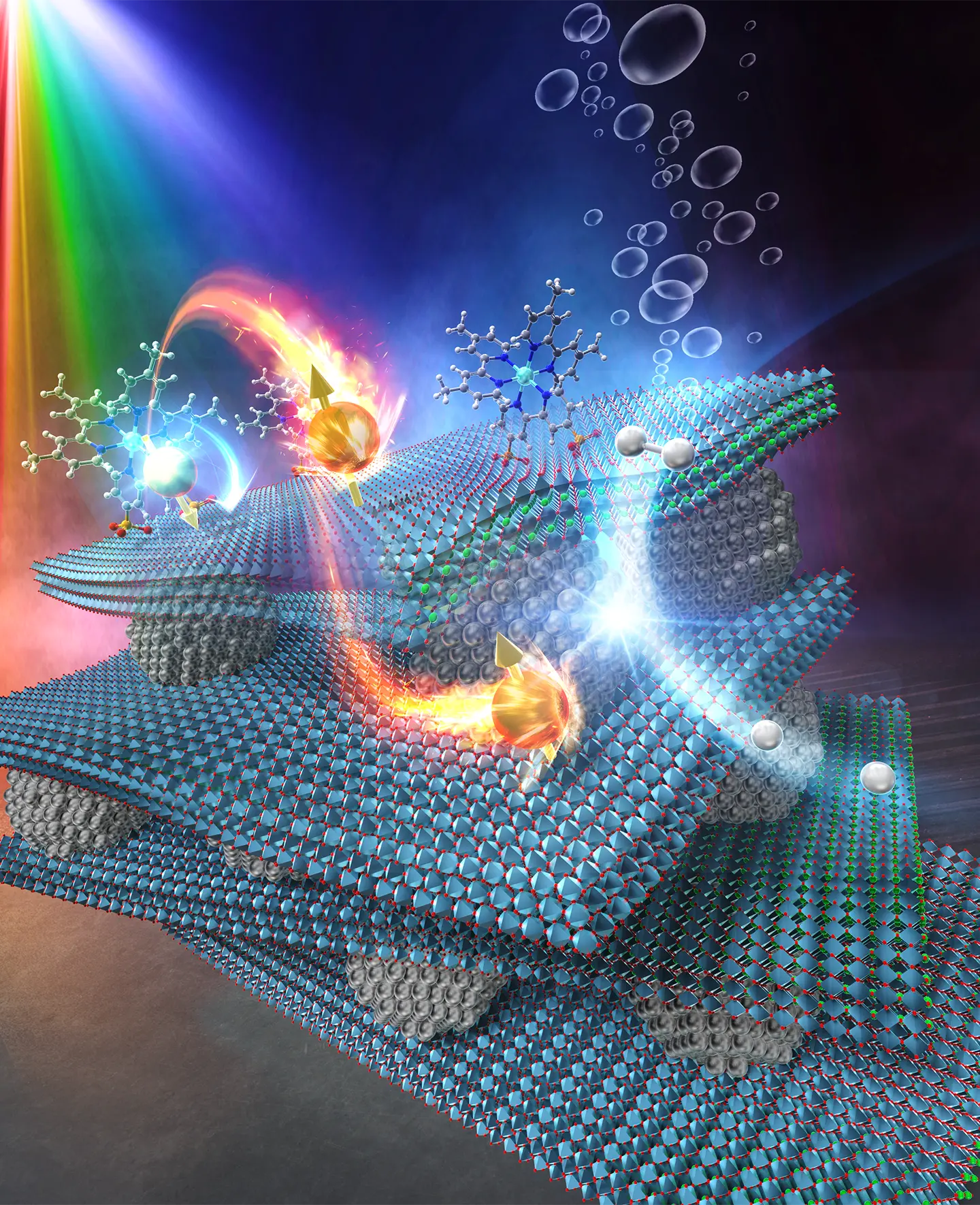
A novel dye-sensitized photocatalyst developed at Science Tokyo enables the capture of long-wavelength visible light for efficient hydrogen conversion, surpassing conventional photocatalysts. By replacing the metal center of traditional complexes with osmium, the researchers achieved a photocatalyst that can absorb light with wavelengths beyond 600 nanometers. This shift in the absorption profile enables the system to harvest a broader range of the solar spectrum, generating more excited electrons to enhance hydrogen-evolution performance.
Advanced Dye‑Sensitized Photocatalysts for Long‑Wavelength Solar Hydrogen Production
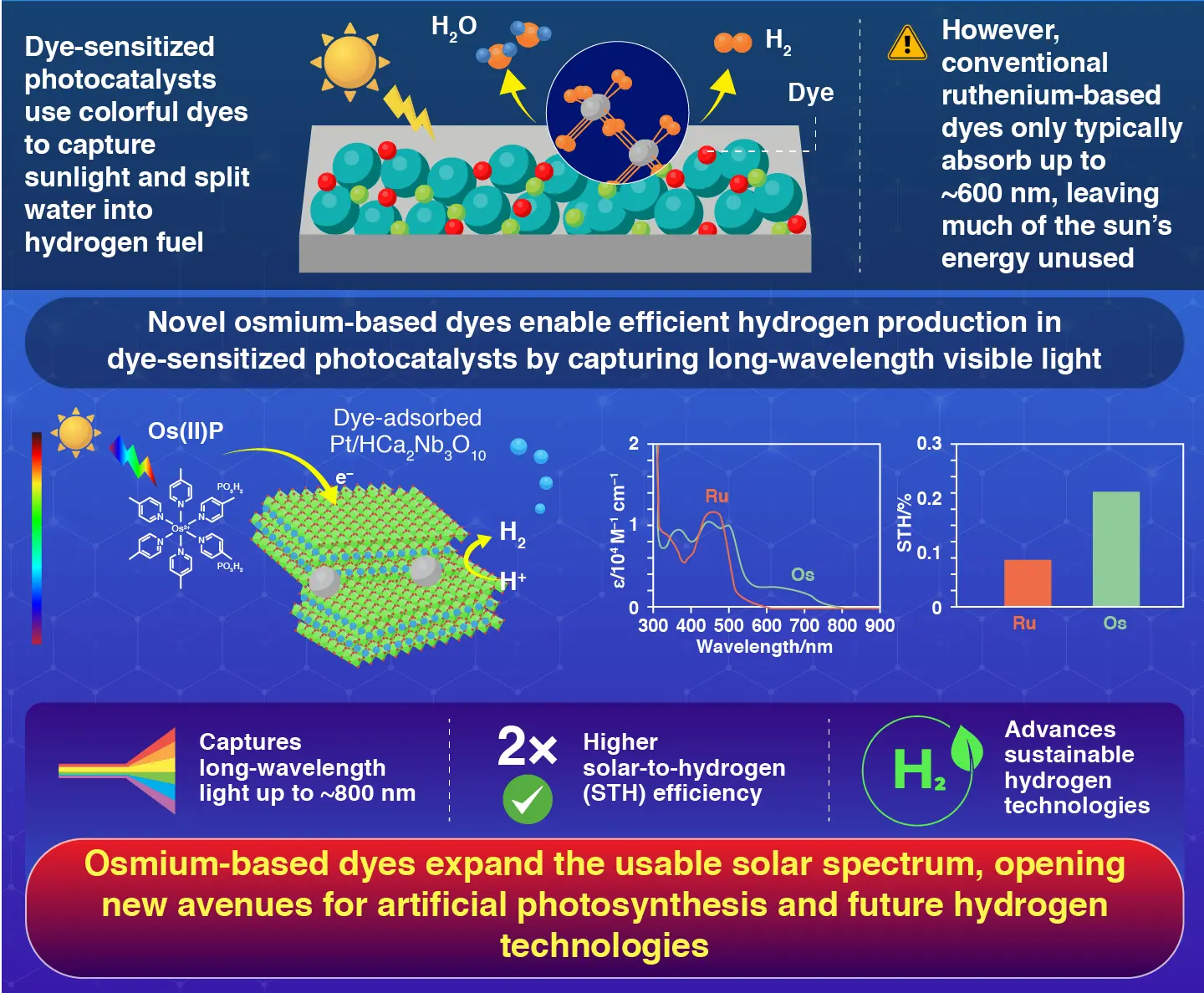
Generating hydrogen from sunlight is a promising strategy that allows clean and renewable fuel production without releasing carbon emissions. The process of solar-to-hydrogen conversion often involves the use of photocatalysts (light-absorbing catalysts) that absorb sunlight and use the solar energy for splitting water into hydrogen and oxygen. In most conventional systems, photocatalysts only absorb a part of the visible-light spectrum, which means much of the sun’s energy remains unused. To improve the efficiency of hydrogen production, there is a need for new photocatalysts capable of capturing a wider range of sunlight.
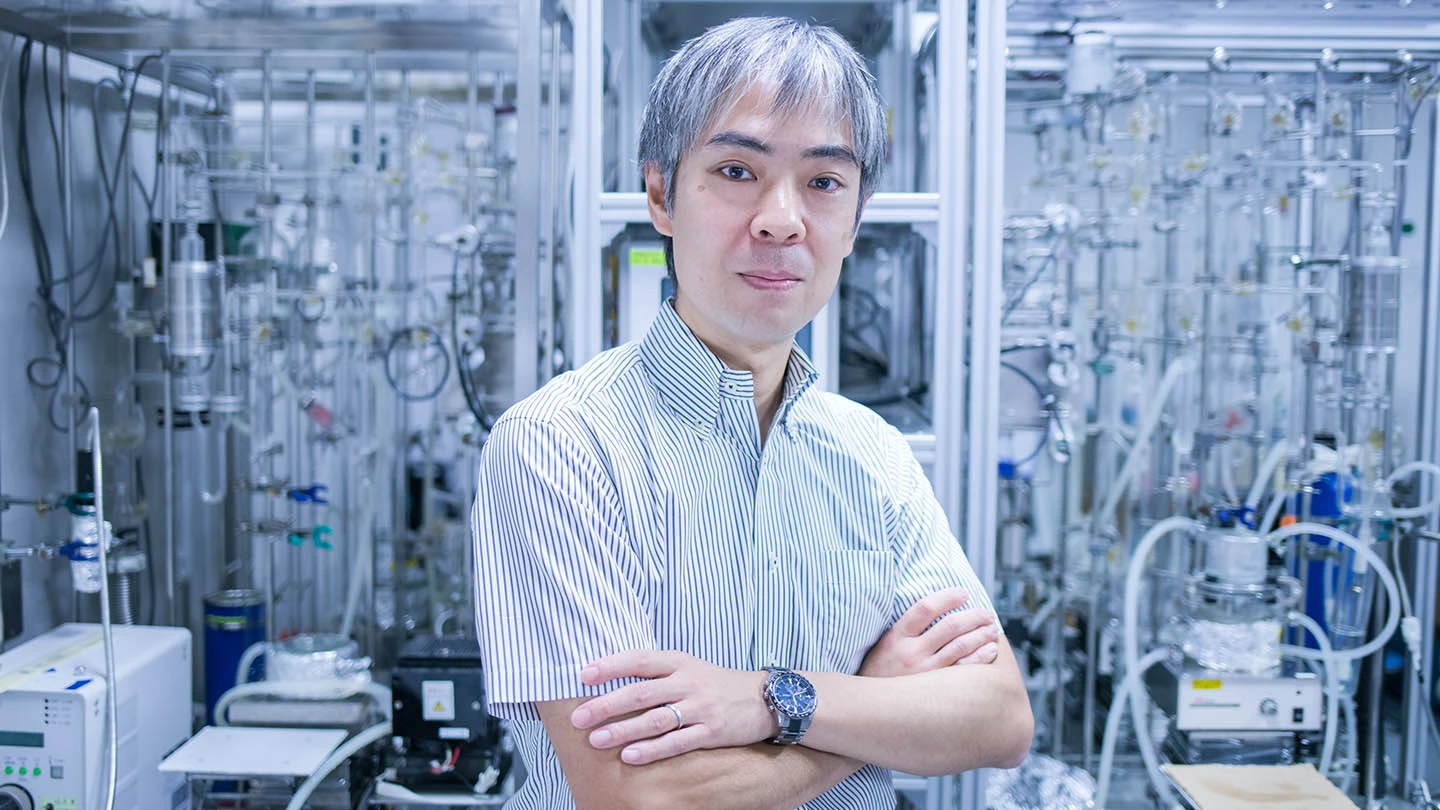
Addressing this challenge, a research team led by Professor Kazuhiko Maeda and graduate student Haruka Yamamoto from Institute of Science Tokyo (Science Tokyo), Japan, developed a new dye-sensitized photocatalyst that can absorb long-wavelength visible light up to around 800 nanometers. Their study, published in ACS Catalysis on December 5, 2025, reports an enhanced solar-to-hydrogen conversion efficiency—up to 2 times greater than that of traditional systems.
Dye-sensitized photocatalysts are photocatalyst materials produced by combining a catalyst with a dye molecule that absorbs visible light. The dye molecule acts as a mini antenna, which captures sunlight and passes the energy to the catalyst surface.
“Dye-sensitized photocatalysts typically use ruthenium complexes as the photosensitizing dyes. However, ruthenium-based complexes typically absorb only shorter visible wavelengths up to 600 nm,” explains Maeda.
Focusing on this factor, the team replaced the metal core of the complex, swapping ruthenium for osmium. This change dramatically broadened the range of solar absorption, allowing the photocatalyst to harness more of the sun’s energy, generating additional excited electrons that directly contribute to the hydrogen-evolution performance. The improvement arises from the heavy-atom effect of osmium, which promotes singlet–triplet excitation, a low-energy electron transition that permits absorption of long-wavelength visible light.
“In our efforts to extend the range of light absorption, osmium proved to be a key element in accessing wavelengths that ruthenium complexes could not use, leading to a 2-fold increase in hydrogen production efficiency,” says Maeda.
The enhanced efficiency suggests that the photocatalyst can convert more incoming photons into chemical energy, even under weak or diffuse sunlight. This is particularly beneficial for technologies like artificial photosynthesis and solar-energy conversion materials that work in real-world solar conditions.
While scientists continue to optimize the metal complexes, the current research lays an essential groundwork for next-generation photocatalysts—paving the way for future technologies and broader use of sustainable energy.
Reference
- Authors:
- Haruka Yamamoto1, Toshiya Tanaka1, Masahito Oura2, Kelly M. Kopera3, Megumi Okazaki1, Ken Onda2, Thomas E. Mallouk3*, and Kazuhiko Maeda1,4*
- Title:
- Charge Transfer Dynamics in Dye-Sensitized Photocatalysts Using Metal Complex Sensitizers with Long-Wavelength Visible Light Absorption Based on Singlet–Triplet Excitation
- Journal:
- ACS Catalysis
- Affiliations:
- 1Department of Chemistry, Institute of Science Tokyo, Japan
2Department of Chemistry, Kyushu University, Japan
3Department of Chemistry, University of Pennsylvania, United States
4Research Center for Autonomous Systems Materialogy, Institute of Science Tokyo, Japan
Related articles
Further information
Professor Kazuhiko Maeda
School of Science, Institute of Science Tokyo
Contact
Public Relations Division, Institute of Science Tokyo
- media@adm.isct.ac.jp
- Tel
- +81-3-5734-2975