Team Science Tokyo wins Gold Project Award at BIOMOD 2025
Team Science Tokyo, consisting mainly of undergraduate students from the Institute, has won the Gold Project Award at the 2025 International Biomolecular Design Competition (BIOMOD) held in Changchun, China from October 17 to 19.
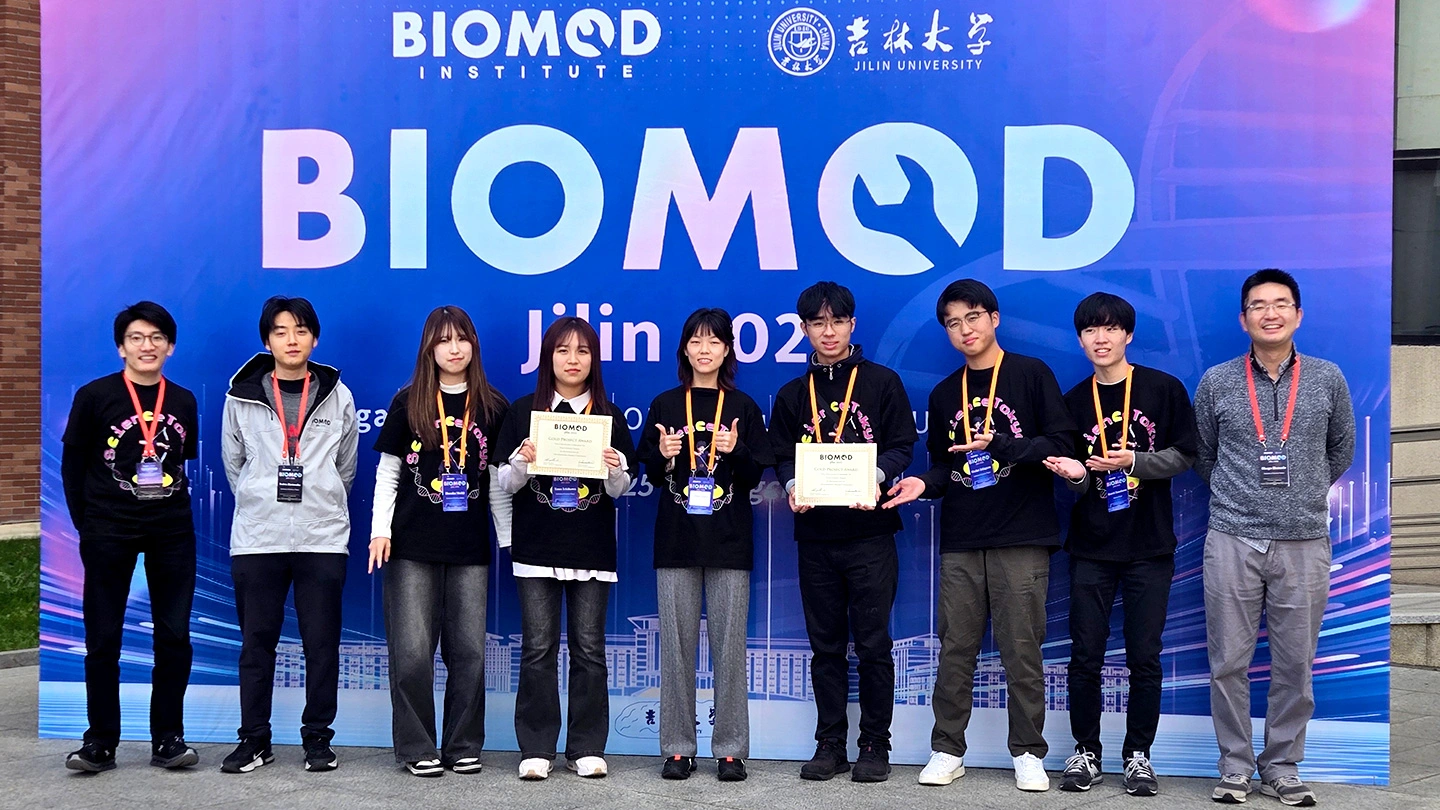
BIOMOD, established in 2011 at the initiative of Harvard University, is an international competition in the fields of molecular robotics and molecular computing for university undergraduate students. Currently, the competition is organized by the Biomolecular Design Institute, CBI Research Institute, which is headquartered at the lab of Assistant Professor Shogo Hamada at Science Tokyo’s School of Computing.
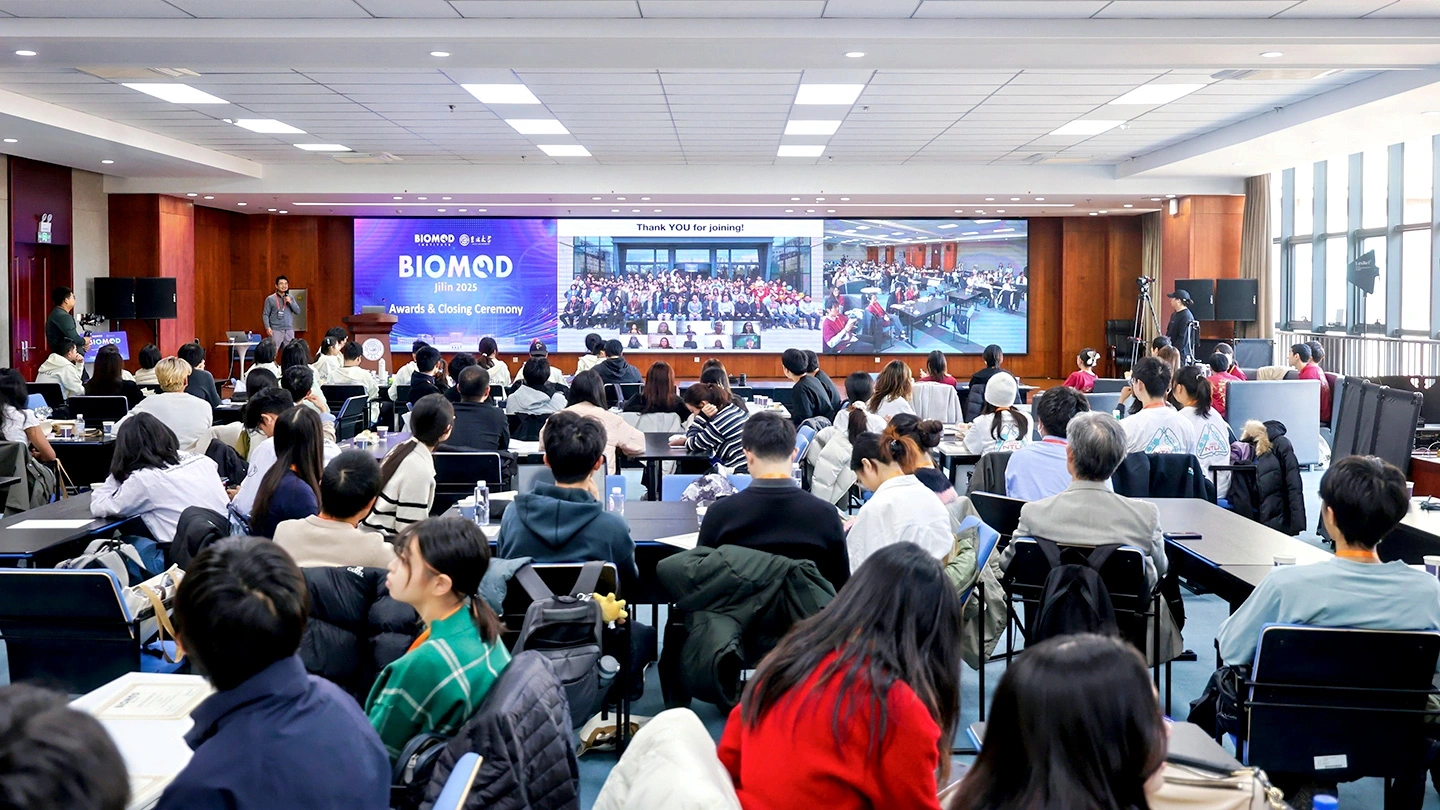
Over the years, BIOMOD has grown into a competition that has welcomed more than 1,500 undergraduate students from over 16 countries and regions. This year, 19 teams consisting of approximately 140 participants from around the world competed to develop innovative biomolecular designs, and the devices and systems utilizing these designs.
The Gold Project Award is awarded to teams demonstrating exceptional overall scores across the evaluation criteria for their project website, video, and presentation. Team Science Tokyo were commended for their research, entitled “Bow-like DNA bending method using Avidin–Biotin binding.”
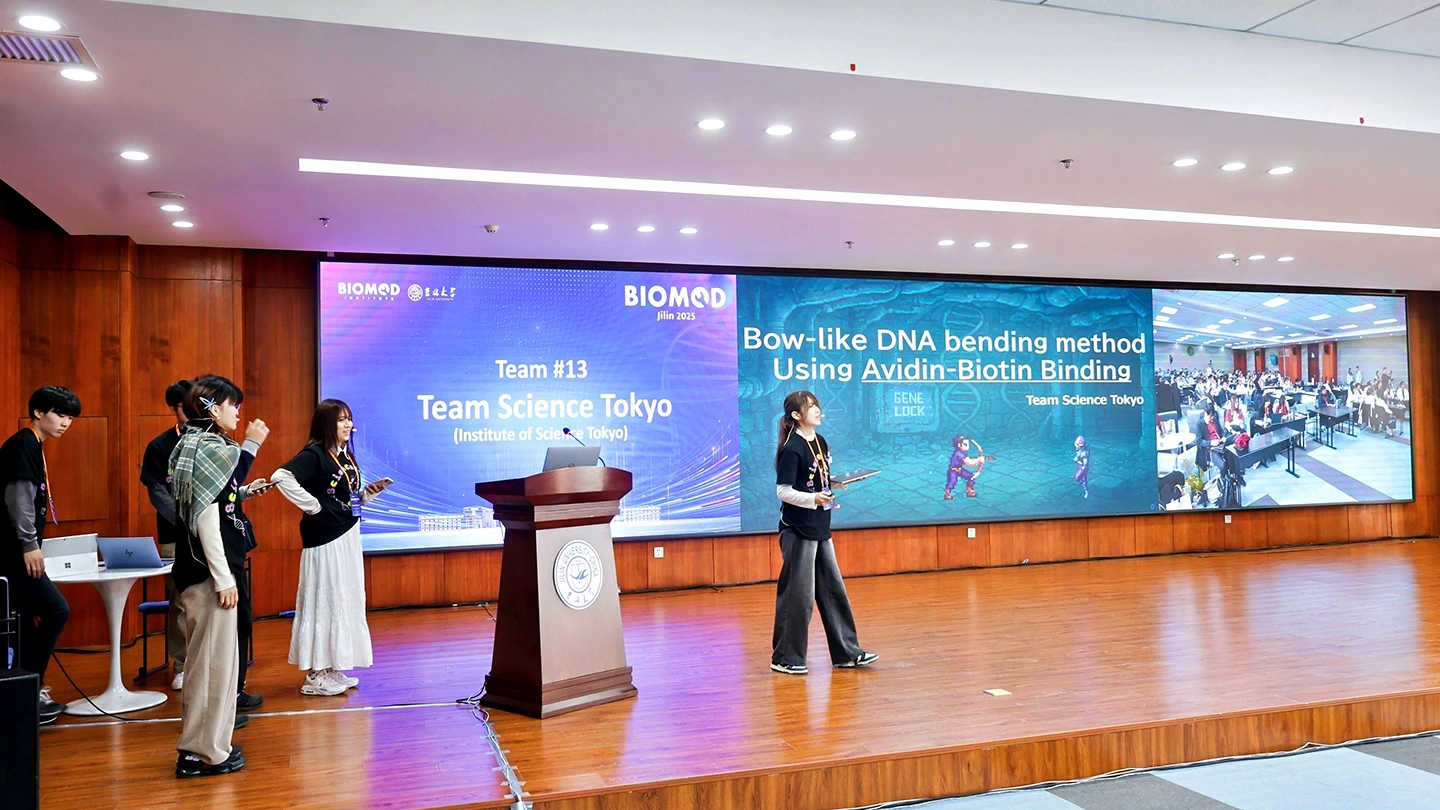
Comments from Team Leader Yuna Ichikawa
This year, I joined BIOMOD as the team leader of Team Science Tokyo. All the members were first-time participants, starting with little to no specialized knowledge, let alone experience in video editing or programming. However, with the guidance and support of our two faculty mentors, as well as our graduate and undergraduate student mentors, we worked together as a team and successfully completed this project.
This was my first international conference, and I struggled at times with presenting in English. However, thanks to the support of many people, I was able to get through the talk, and it became an extremely valuable experience.
Interacting with many people in the broader academic community throughout the competition greatly broadened my horizons, which was a significant gain. I strongly felt the importance of taking on challenges on the international stage while still a student, and I intend to carry this experience forward into my future studies and research activities.
Building on these experiences, I hope we can continue to grow as a team and achieve even greater results next year. I would like to warmly thank everyone who was involved in this project.
Team Science Tokyo members
-
Student members
- Yuna Ichikawa, 1st year, Life Science and Technology
- Haruka Nishii, 1st year, Life Science and Technology
- Godai Ishiguro, 1st year, Life Science and Technology
- Yoshikazu Yamakawa, 1st year, Life Science and Technology
- Takumi Sugiura, 1st year, Life Science and Technology
- Furui Xiang, 2nd year, Department of Materials and Life Sciences, Faculty of Science and Technology, Sophia University
-
Student mentors
- Yosuke Ochi, 1st year doctoral student, School of Computing
- Sota Hatanaka, 2nd year master’s student, School of Computing
-
Faculty mentors
- Assistant Professor Shogo Hamada, School of Computing
- Professor Masahiro Takinoue, Laboratory for Chemistry and Life Science, Institute for Integrated Research
-
Collaborator
- Professor Jiro Kondo, Department of Materials and Life Sciences, Faculty of Science and Technology, Sophia University