Supercomputer “TSUBAME4.0” LEGO Model on Display
Now at Hisao & Hiroko Taki Plaza
From April 15, 2026, a LEGO block model of the supercomputer "TSUBAME4.0" is on display at the entrance of Hisao & Hiroko Taki Plaza.
TSUBAME4.0 is a supercomputer operated by the Center for Information Infrastructure and is installed on the Yokohama campus. Earlier systems up to TSUBAME3.0 were located on the Ookayama campus. This LEGO model allows visitors to enjoy the appearance of TSUBAME4.0 at the Ookayama campus.
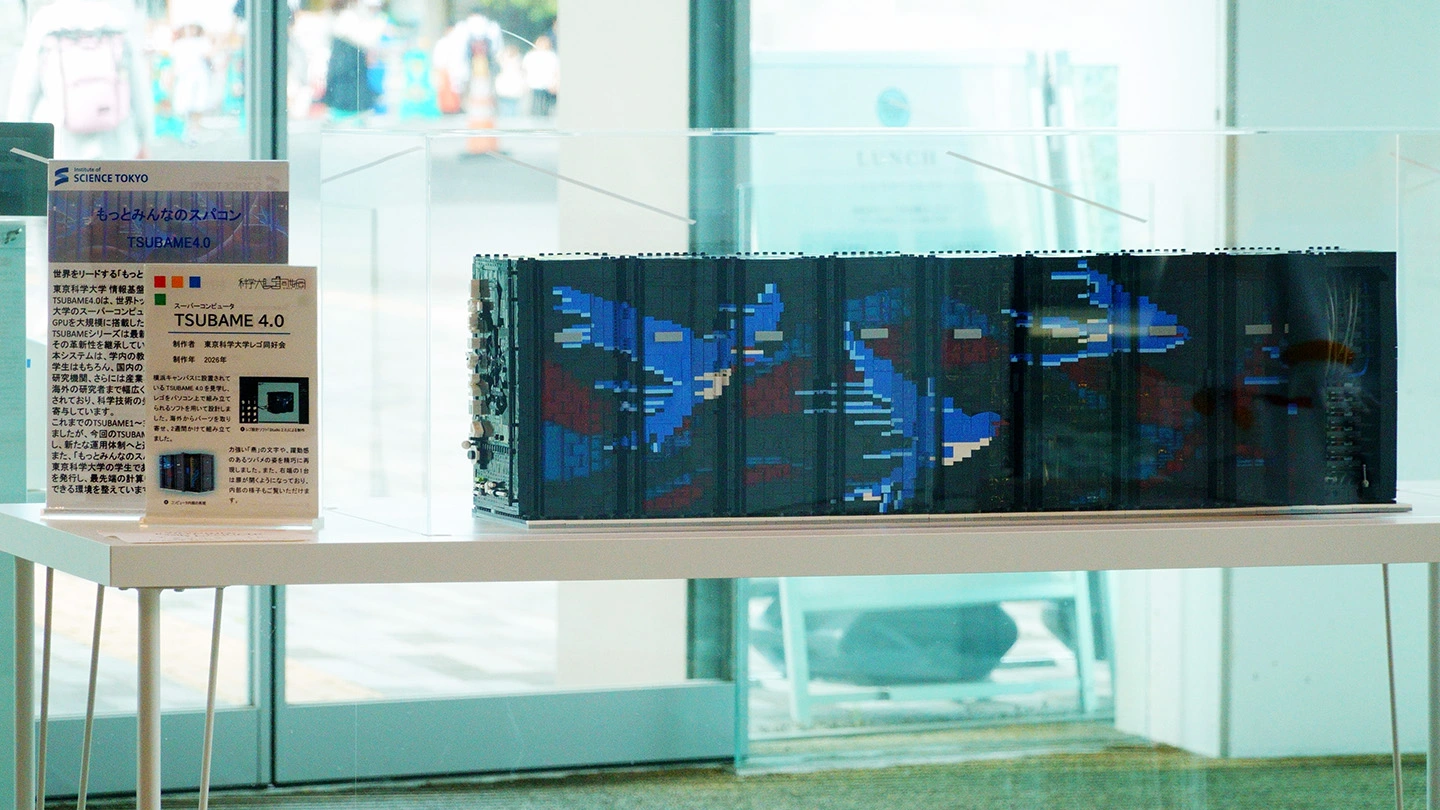
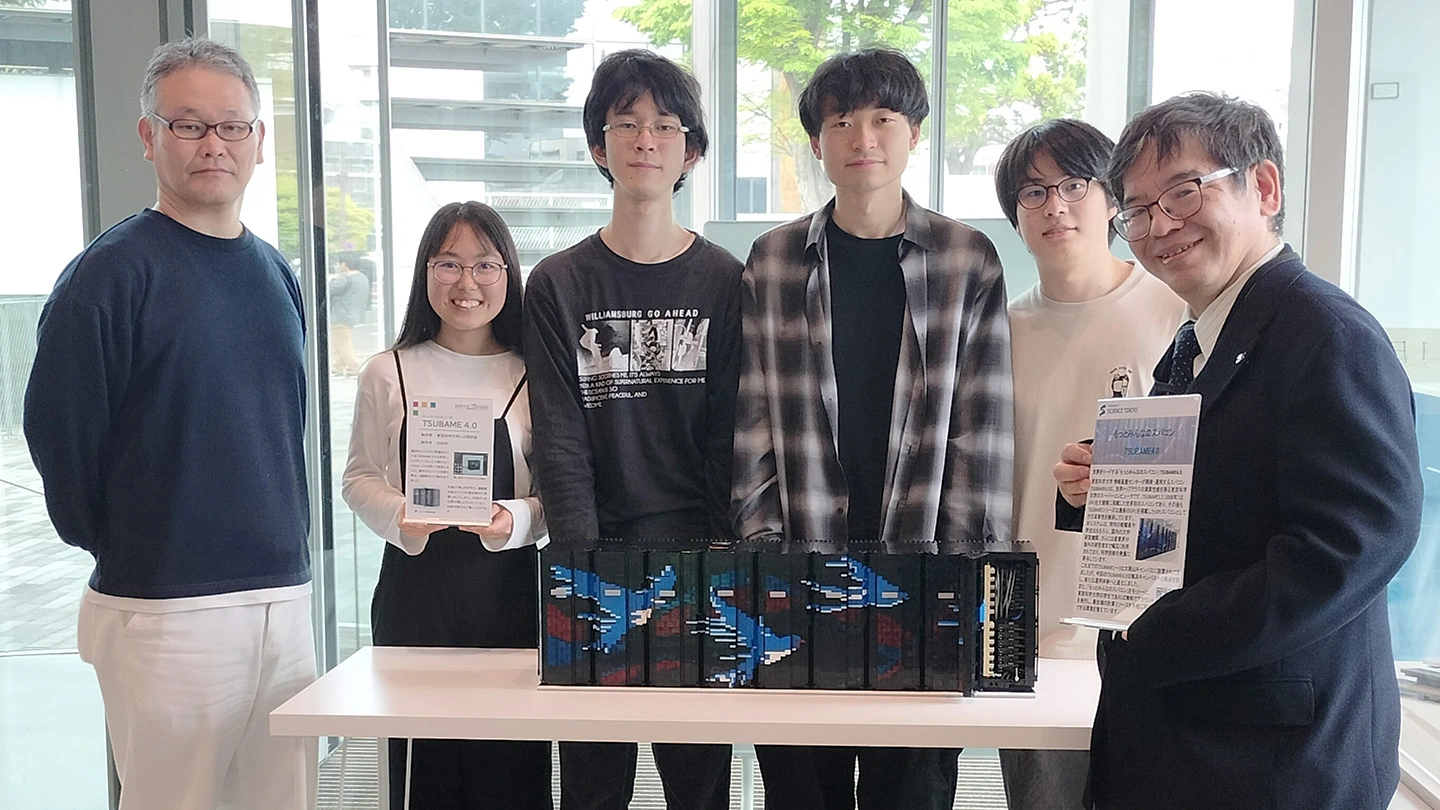
The model was created by students from the LEGO Club in collaboration with the center. It is designed not only to look accurate but also to be easy to assemble, transport, and maintain.
The overall design of this model was developed by Koki Nakajima (third-year undergraduate student, Mechanical Engineering, School of Engineering), and the internal design was developed by Katsuaki Takahashi (third-year undergraduate student, Materials Science and Engineering, School of Materials and Chemical Technology). Four other students were responsible for incorporating the swallow illustrations into the surface. In this article, we introduce behind-the-scenes stories from the design and production process in an interview format. The interviewees are Nakajima and Takahashi.
Interview with Student Creators
— Design Ideas and Challenges —
Q1. What did you focus on when designing the LEGO model of TSUBAME?
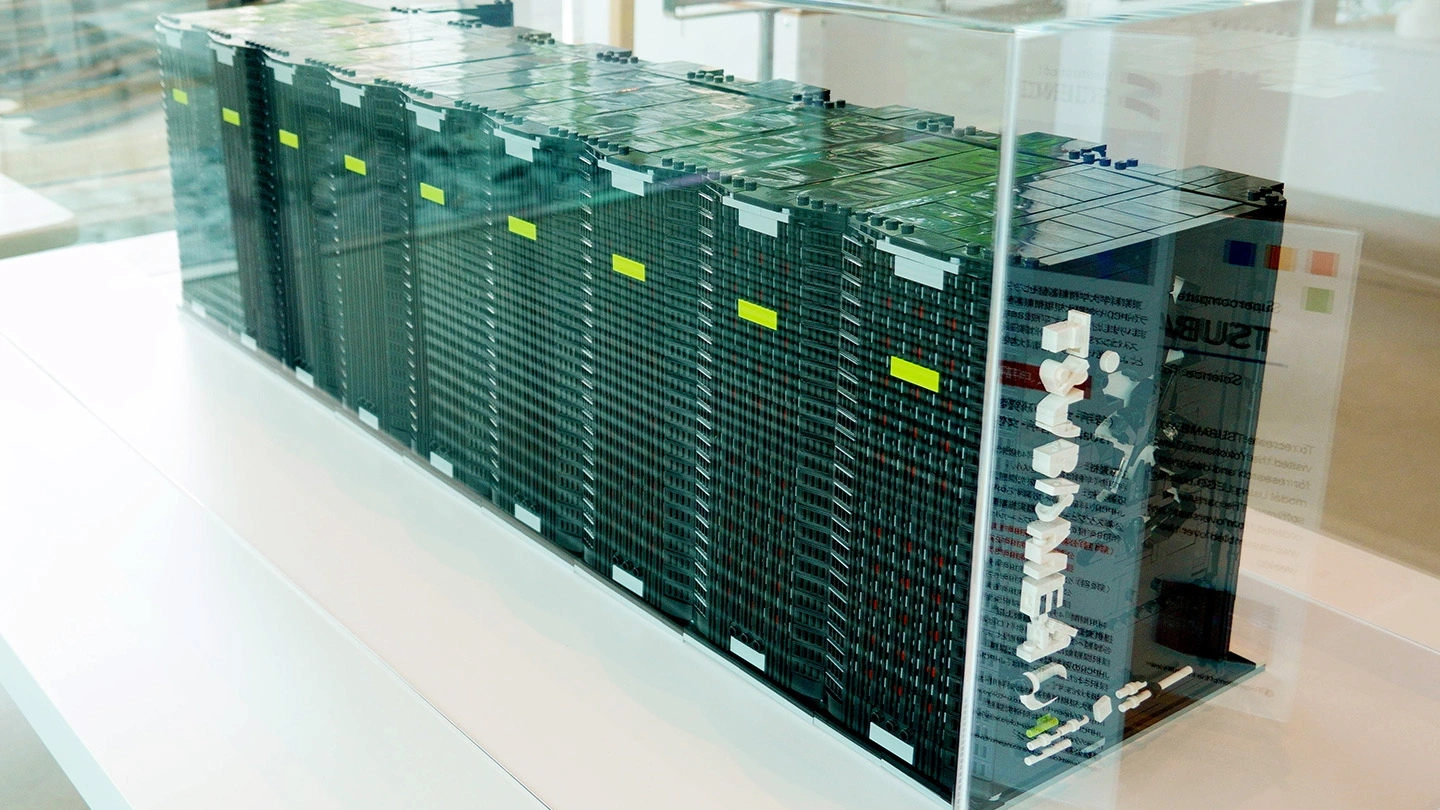
Nakajima We used a software tool called Studio 2.0 to design the model, and then ordered parts and assembled it based on the design. For the outer frame, we made it possible to separate the model into racks so that multiple people can build it easily and move it without difficulty. We also thought about future students who will maintain it, so we made the structure easy to repair. For the sides, we used photos taken during a visit to the real machine and reproduced details such as the gaps between doors.
Takahashi The rightmost rack can be opened, so we also designed the inside. The interior needed enough strength, and we also wanted to follow the real structure, so we designed it together with the outer frame. While keeping the standard design of nine racks, we adjusted only the rack with the interior. This allowed us to achieve both accuracy and strength. Please take a close look and try to find the differences.
Q2. What was the most difficult part of the project?
Nakajima Because of the scale, the “TSUBAME” lettering on the side became very small, and it was difficult to reproduce its unique style. Creating the dot-style surface design was also hard. After building the rack shape, we added the swallow image, and filling the space without gaps took about 20 hours in total.
Takahashi The inside has few curves and is mostly made of blocks, but the structure is very complex, so the design was difficult. During assembly, we sometimes had to find just one specific part among more than 1,000 pieces, which required a lot of time and concentration.
Q3. What part did you work hardest on?
Nakajima In past large LEGO projects, we often focused on design but had problems with portability and maintenance. In this model, we tried to balance all of these aspects so that future members can continue to use it. We also calculated the proportions from the real machine’s design and made the height, width, and depth as close as possible to the original.
Takahashi To reproduce the many cables inside the real machine, we used many hose-type LEGO parts that we do not usually use. These parts are difficult to handle both in design and assembly, but we worked hard to complete them successfully.
About the Exhibition
This exhibition aims to make advanced research infrastructure more familiar to a wide audience. Through this detailed LEGO model, visitors can better understand the structure and scale of a modern supercomputer.
The display is open to both university members and the public. If you visit the Ookayama campus, please stop by and take a look.