Science Tokyo’s sailors shine at Fall 2025 Kanto Intercollegiate Student Sailing Competition
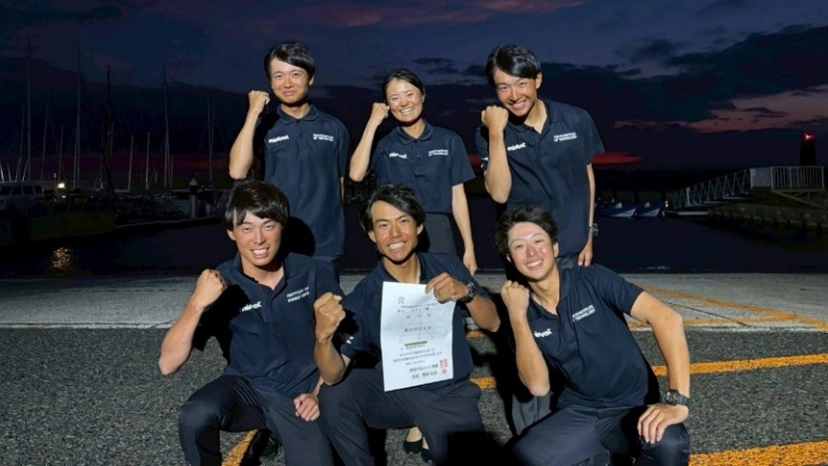
The Science Tokyo Sailing Team has put in outstanding performances at the Fall 2025 Kanto Intercollegiate Student Sailing Competition, held at Morito Coast in Hayama, Kanagawa Prefecture in September and October. The Institute achieved second and seventh-place finishes in the Women’s Series and an overall fifth-place finish in the Final Series.
Women’s Series
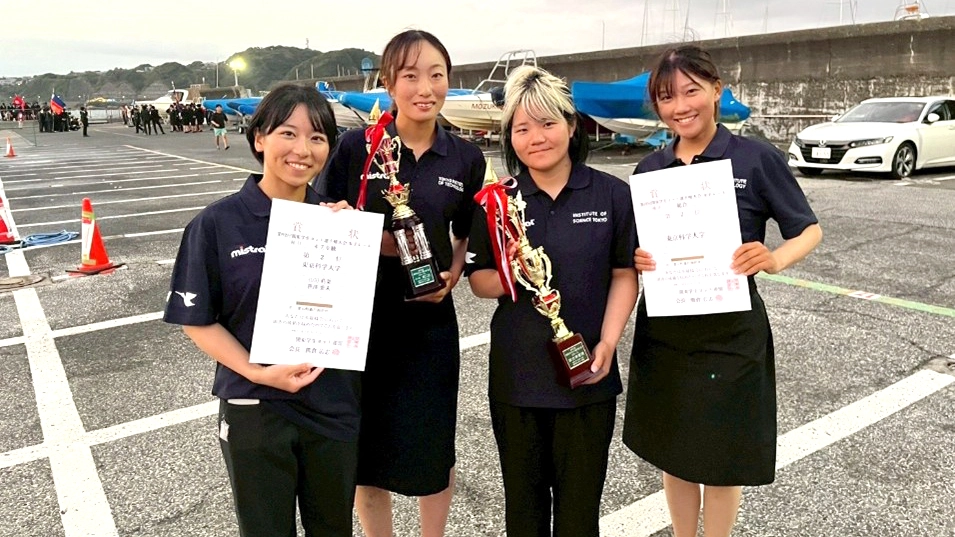
The Women’s Series of the Fall Kanto Intercollegiate Student Sailing Competition is a team competition where universities compete for overall rankings across two classes — the Snipe and the 470. In the races held on September 14 and 15, Science Tokyo finished second in the 470 class — a historic achievement for the team — and seventh in the Snipe class. Combining the results from both classes, the Institute’s women achieved second place in the overall university rankings.
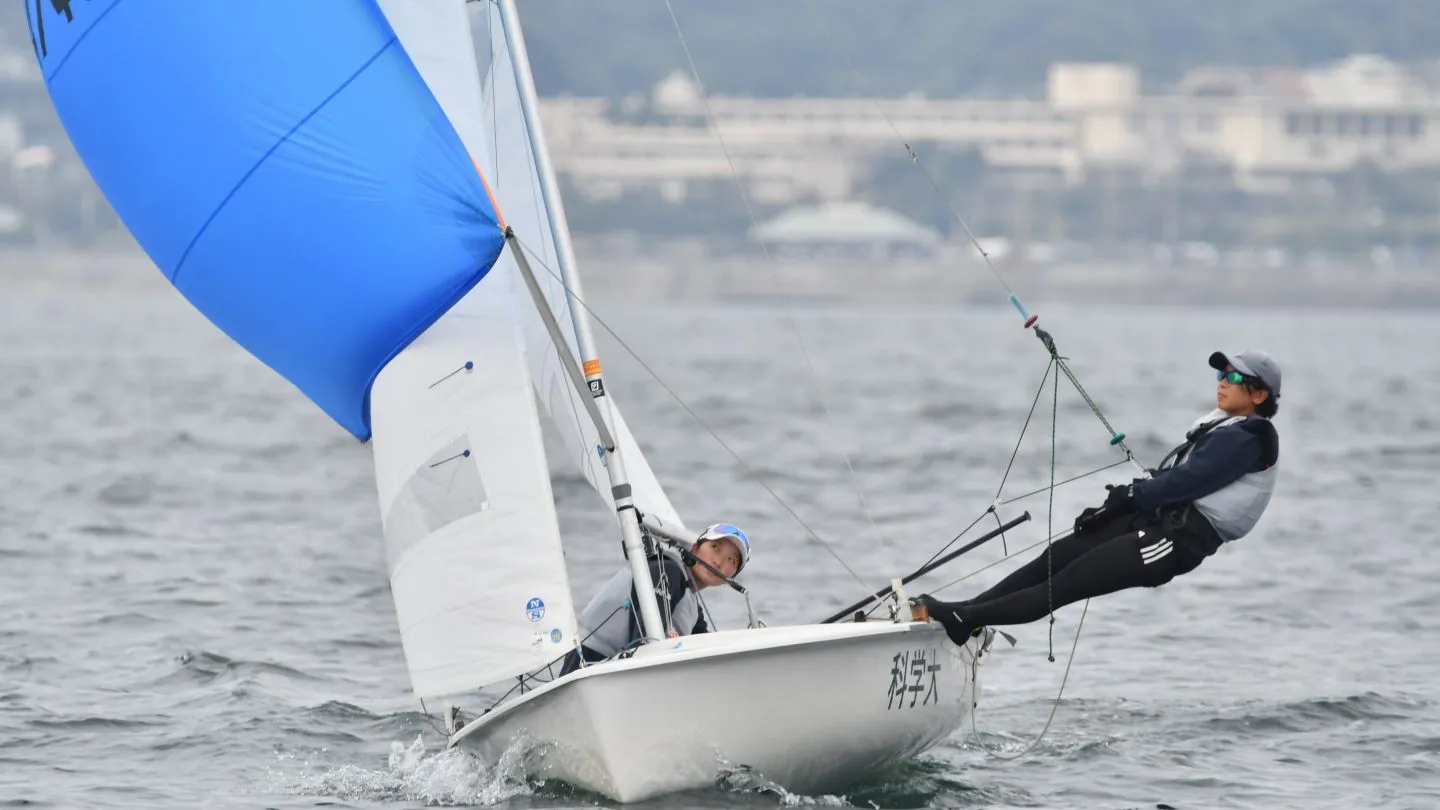
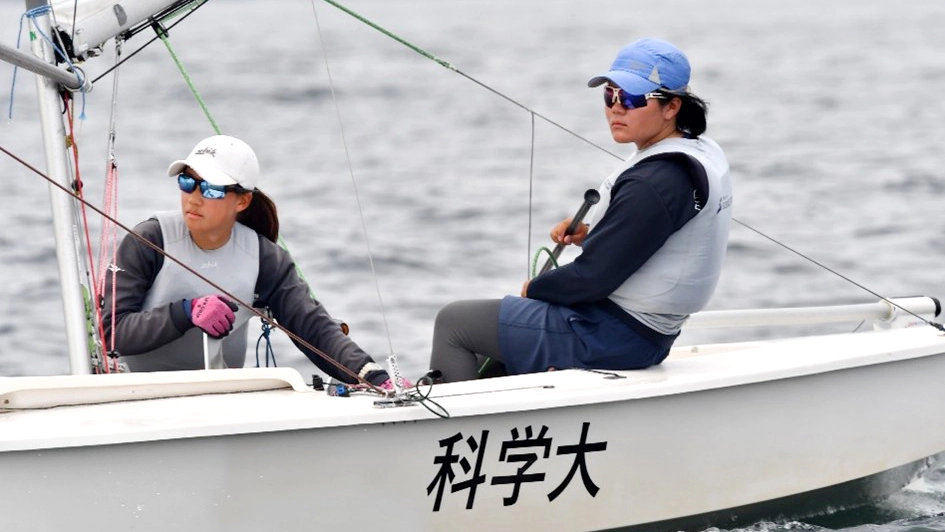
470 class — 2nd place
Rina Yamada, 4th year, Life Science and Technology
Manami Sasazawa, 4th year, Materials Science and Engineering
Snipe class — 7th place
Saki Takeda, 2nd year, Materials Science and Engineering
Haruna Suzuki, 3rd year, Transdisciplinary Science and Engineering
Comments from participants
Yamada-Sasazawa pair
2nd place in 470 class
Speed differences arise easily in the 470 class depending on experience, making it difficult for inexperienced sailors to excel. In this challenging environment, we aimed for success in the 470 class and persevered for four years. This time, we finally achieved our long-awaited goal of finishing on the podium, securing the runner-up position in the 470 class for the first time since the founding of the Science Tokyo Sailing Team. It was great to be able to hold the coveted trophy in our hands, and we are filled with immense joy and gratitude. We extend our heartfelt gratitude to everyone who supported us.
Our pair was a team hastily formed just before the competition, starting from a disadvantage where we could not secure sufficient practice time due to injuries. However, within the limited time available, we meticulously analyzed other teams and conditions like wind speed and waves, responded flexibly to changes, and achieved stable results throughout the regatta.
In this competition, we engaged in fierce battle for the win against experienced powerhouse universities. Although we were tied in points with the first-place team, we ultimately finished in second by a very narrow margin with equal points. Maintaining a stable position near the top across a wide range of conditions, from light winds to strong winds, gave us tremendous confidence.
Predicting wind direction and tidal currents in competitive sailing, and selecting the optimal course, is precisely akin to the process of deriving principles from complex data in academic studies and research, and finding the optimal solution to unsolved problems. The fact that we could deliver maximum performance even under high-pressure conditions is proof that the logical thinking skills and concentration cultivated daily at Science Tokyo truly come alive in practical situations.
Drawing on this valuable experience, we will continue to face challenges in our studies and research with confidence, composure, and perseverance.
Takeda-Suzuki pair
7th place in Snipe class
This was our first time competing in the women's races as a pair. While we did not reach the podium, we were thrilled to have many moments where we were able to race at the front. Navigating challenging conditions with unstable wind and waves, we adapted our racing style and course strategy on the fly to tackle each situation.
This flexibility in approach and versatility in problem-solving translate to many areas, including academic pursuits. We will continue to train diligently and greatly appreciate your continued support.
Final Series
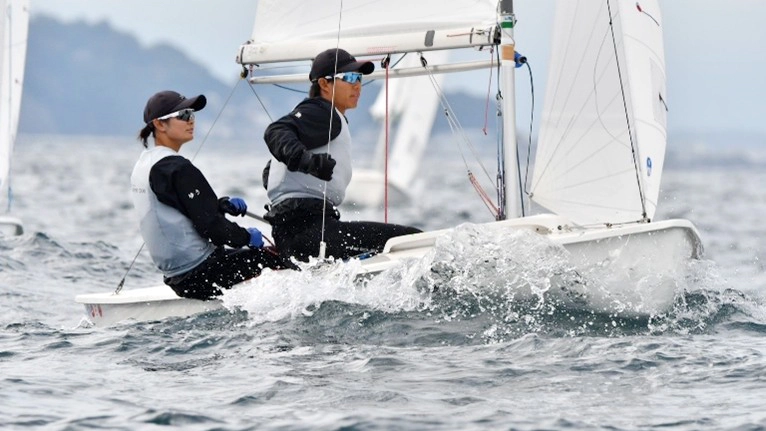
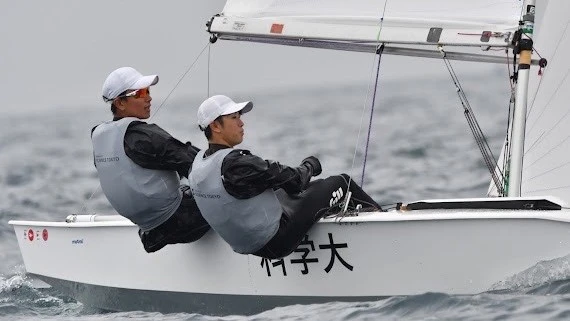
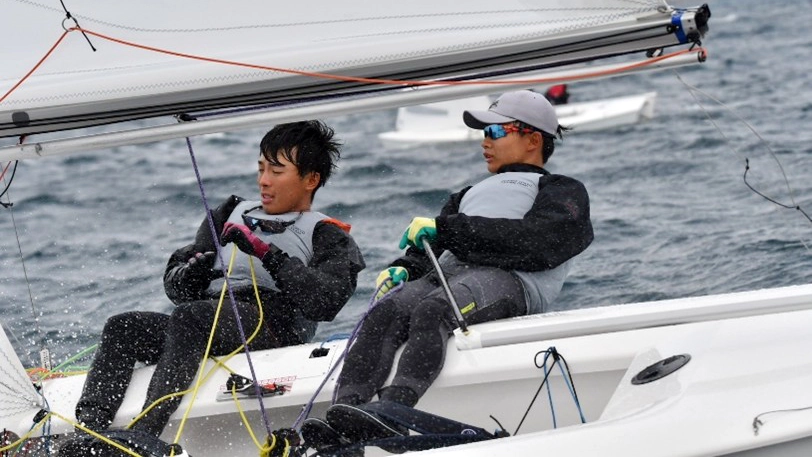
In the Kanto Final Series held from October 11 to 13, Science Tokyo achieved an overall fifth-place finish in the Snipe class, which featured 15 participating universities. This was the Institute’s highest result in the competition since the founding of the Science Tokyo Sailing Team.
In the Final Series of the Fall Kanto Intercollegiate Student Sailing Competition, each university fields three boats per class, with rankings determined by the total points earned. Science Tokyo’s result earned them a spot in the All Japan Intercollegiate Sailing Championships for the second year running.
Kanto Final Series — Overall 5th place
Ryo Setaka, 4th year, Systems and Control Engineering
Takuto Sekine, 4th year, Electrical and Electronic Engineering
Yu Endo, 4th year, Life Science and Technology
Yuki Takahashi, 4th year, Computer Science
Ryusei Ohtani, 4th year, Earth and Planetary Sciences
Yamato Haga, 3rd year, Chemistry
Comments from participants
Skipper and crew member Yuki Takahashi
Snipe class — Overall 5th place
To qualify for the All Japan Intercollegiate Sailing Championships, teams must first prevail in the Kanto regional qualifiers, one of Japan’s fiercest competitions, and then place highly in the Kanto Final Series. Until about ten years ago, the Science Tokyo (formerly Tokyo Institute of Technology) Sailing Team faced grueling battles just at the qualifying stage. However, in recent years, a thorough overhaul of the training regimen has paid off. Five years ago, the team achieved their first nationwide intercollegiate appearance in 33 years. Today, this team is even called “the university that trains the hardest in Kanto.” What was once a distant goal has now become an attainable target, and the team has set an even higher bar — finishing among the top teams at the national level.
We finished sixth in the Kanto spring finals and fifth in the fall finals, securing the team’s first-ever consecutive top placements in these races since its founding. The only remaining goal is finishing among the top teams in the All Japan Intercollegiate Sailing Championships. Every member of the team strongly feels that reaching this point required the indispensable support and encouragement of many people. We would like to take this opportunity to express our gratitude.
In competitive sailing, where experienced sailors hold a significant advantage, our team — composed entirely of novices — gained the ability to compete on equal footing with them through persistent, diligent effort. Precisely because we lacked a standout ace, we cultivated a sense of unity and cohesion as a “team,” enabling us to achieve strong results. I strongly feel these two processes will undoubtedly be valuable assets in my future research and professional life. Furthermore, our ability to select the optimal course during races and maximize the boat's potential allowed us to challenge sailors from other universities who were physically larger than us. We also acquired the skill to adjust the sails to a shape that effectively converts wind power into propulsion, even with our lighter weight.
This will be our final challenge with the current team at the upcoming All Japan Sailing Intercollegiate Championships. We owe our fulfilling sailing experience thus far to our teammates and everyone at the harbor. We will give our all to repay this debt and to avenge last year's thirteenth-place finish out of 24 universities. We sincerely ask for your continued support.
Skipper Ryo Setaka
Snipe class — Overall 5th place
I am thrilled that we finished fifth at the Kanto fall contest and qualified for the second year running for the All Japan Intercollegiate Sailing Championships, a feat never achieved since the founding of the team. This three-day competition saw challenging conditions with strong winds due to an approaching typhoon, but we were able to overcome them by leveraging the results of our summer training and working together as a team.
At these races, we used sails purchased with funds raised through the crowdfunding campaign conducted during summer vacation, thanks to everyone's generous support. We extend our heartfelt gratitude to all those who contributed.
This experience of persevering through challenging conditions has reaffirmed the importance of a tenacious approach to academic pursuits. I will continue to value the power of sustained efforts as I pursue goals in my daily studies.
At the All Japan Intercollegiate Sailing Championships, we will carry the hopes of the 470 class team, who unfortunately fell short, and will do our utmost to finish among the top sailors. We appreciate your continued support and encouragement.
Skipper Ryusei Ohtani
Snipe class — Overall 5th place
This competition featured many races in strong winds, presenting challenging conditions that demanded sound judgment and precise boat handling. I am delighted that our entire team remained calm throughout and finished fifth.
Balancing these activities with daily research and classes is only possible thanks to the understanding of our laboratory and professors, and the support of many people. I express my heartfelt gratitude. Our ability to scientifically analyze wind and waves, and apply that knowledge in practice, was a unique strength of the Science Tokyo team. We will draw on this experience at the All Japan Intercollegiate Sailing Championships and give our all to aim for an even higher finish.
Competitive sailing
Competitive sailing is a sport where competitors vie for finishing positions by navigating buoys set in the sea in a prescribed order a specific number of times. The boat’s speed and course greatly influence the outcome. To increase a boat's speed, sailors must skillfully navigate the vessel by constantly adjusting the rudder and sails in response to changing waves and winds. Determining the optimal course requires the ability to anticipate future wind conditions, making it a highly strategic and tactical mental sport requiring advanced skills.
All-Japan student competitions include the Snipe class and the 470 class. Snipe-class dinghies use two sails — a mainsail and a jib. Speed can be hard to come by, so sailors must utilize the wind skillfully while maneuvering strategically in relation to the other boats. Sailors lean over the edge to achieve balance while hooking their feet under straps attached to the boat.
In addition to a mainsail and a jib, 470-class dinghies also use a spinnaker sail. This gives the boat more speed than a Snipe-class dinghy, but also makes balancing more difficult. To prevent the boat from capsizing, "trapeze" wires are attached to the boat, allowing sailors to hang outside the vessel with their feet on the edge of the dinghy.
In both the Snipe and 470 classes, a skipper and a crew member operate the boat as a pair. The skipper is in charge of steering the boat, mainly operating the mainsail, while the crew member balances the boat and decides on the strategy and course based on the surrounding conditions.
About Science Tokyo Sailing Team
The Science Tokyo Sailing Team has a long history and is fully supported by the Kuramae Ushio Association, an alumni association boasting 400 members. Their motto is "developing full-fledged sailors, full-fledged members of society.
Related articles
The Science Tokyo Sailing Team is supported by the Science Tokyo Fund.
Contact
- Remarks
- Science Tokyo Sailing Team
Email scitech.sailing@gmail.com