Using light to read how gene switches change
A new technology to capture the elusive DNA mark “5fC”
What the research is about
Why do muscle cells and nerve cells perform completely different functions even though they contain the same DNA? One key reason is a mechanism known as the “gene switch.” By turning specific genes on or off, cells determine their roles in the body.
One well-known marker involved in turning genes off is 5-methylcytosine (5mC). When 5mC is added to cytosine (C) in DNA, the gene becomes harder to read. However, this state is not fixed. Through the action of enzymes, 5mC gradually changes into different forms. It is converted step by step into 5hmC (5-hydroxymethylcytosine), 5fC (5-formylcytosine), and 5caC (5-carboxylcytosine). Eventually, 5caC is removed, and the original cytosine (C) is restored. Once this mark is removed, the gene can be read again more easily.
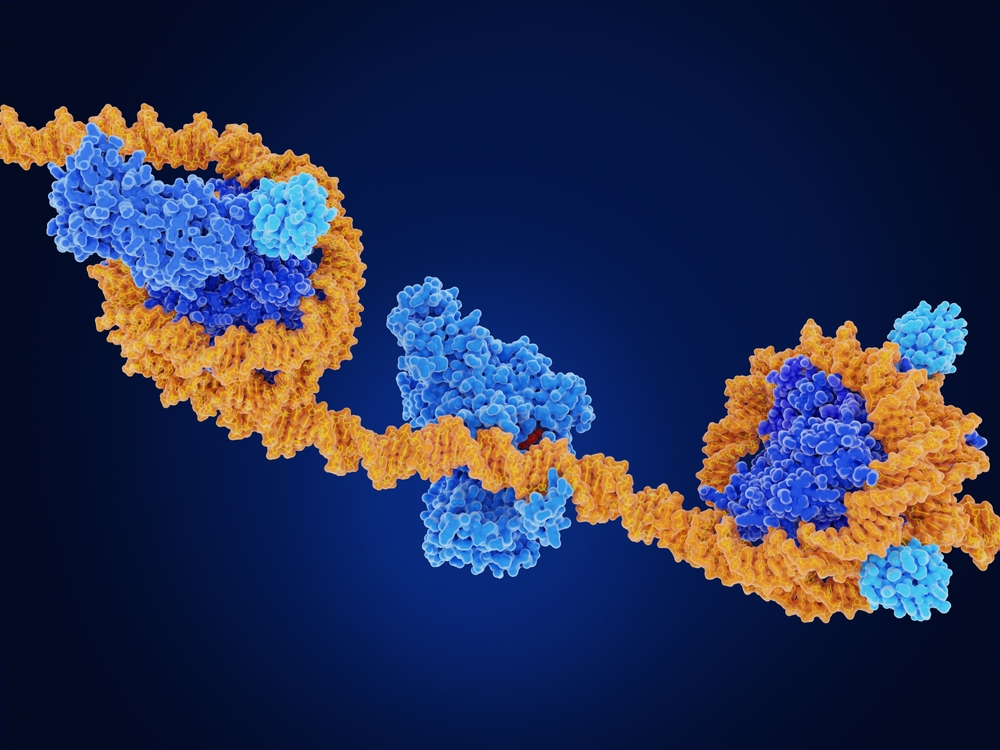
As scientists learned more about this process, they began to realize that gene switches are not simply “on” or “off.” Instead, there are several intermediate stages as genes transition from off to on. However, the roles of these intermediate states have remained largely unknown.
Among them, 5fC has attracted particular attention. It has been found to appear at specific locations and times in DNA, suggesting that it may have a unique role rather than being just a temporary step. However, there has been a major challenge: there were very few methods to accurately detect 5fC in DNA. In other words, it appeared to be important, but it could not be studied directly.
To overcome this challenge, a research team led by Professor Asako Yamayoshi at Institute of Science Tokyo (Science Tokyo) set out to develop a new technology to selectively capture 5fC, which appears during the switching process.
Why this matters
The research team designed a molecule that binds to DNA and reacts only with 5fC under specific conditions. By carefully controlling the length of the linker connecting the 5fC-recognizing group and the artificial nucleic acid, they achieved efficient and selective binding to 5fC.
When ultraviolet (UV) light was applied, they discovered that the reaction depended on the wavelength. Under 365 nm light, the molecule efficiently formed a bond with 5fC. Remarkably, when the resulting bond was exposed to 254 nm UV light, the bond to 5fC remained intact—a very unusual property. In contrast, bonds formed with other modifications such as 5mC and 5hmC were broken by the same light. As a result, only the bond with 5fC remained stable.
In addition, the molecule was designed to emit fluorescence when exposed to a specific light (excitation light). This allows researchers to determine whether a gene is still in the “off” state or transitioning back toward “on.”
Using this property, the team developed a prototype sensor (DNA chip) on a glass surface that can detect 5fC. They successfully demonstrated that only 5fC can be selectively detected by fluorescence.
What’s next
This technology enables researchers to study when and how gene switches change using light. It is expected to be particularly useful in fields where gene regulation is crucial, such as embryonic development and cancer.
The study has already demonstrated the basic feasibility of using this approach as a DNA chip. In the future, it may lead to new medical and diagnostic tools for detecting 5fC.
Comment from the researcher
It has long been recognized that genes are defined not only by their sequence, but also by small chemical marks added to them. These marks are extremely small and difficult to detect. This research represents a first step toward capturing such ‘invisible differences’ using light. We hope it will help deepen our understanding of how life works.
(Asako Yamayoshi, Professor, School of Life Science and Technology, Institute of Science Tokyo)

Dive deeper
Explore more research in Science for All
Science for All showcases cutting-edge research at Science Tokyo and highlights the ideas, people, and possibilities shaping the future.

Contact
Research Support Service Desk