Artwork by Science Tokyo graduate Seiran Tsuno displayed, acquired permanently by Metropolitan Museum of Art in New York
Tsuno reflects on origins of her portrayal of human body and expression
Artwork by artist and fashion designer Seiran Tsuno, who completed her master’s degree at Science Tokyo in March 2026, is currently on show at the Costume Art exhibition at the Metropolitan Museum of Art (The Met) in New York, which runs until January 2027. Her Out of Body, In Dress creation has been permanently acquired by The Costume Institute at The Met.
While working as a psychiatric nurse, Tsuno has continued her creative activities, building a unique artistic world based on her own bodily experiences and encounters in the field of mental health care. A key factor in nurturing this world was her encounter with Asa Ito, director of DLab⁺ at Science Tokyo’s Institute of Future Science and professor at the Institute for Liberal Arts. Tsuno says her dialogue with Ito marked a major turning point, enabling her to transform her bodily experiences into research and artistic expression.
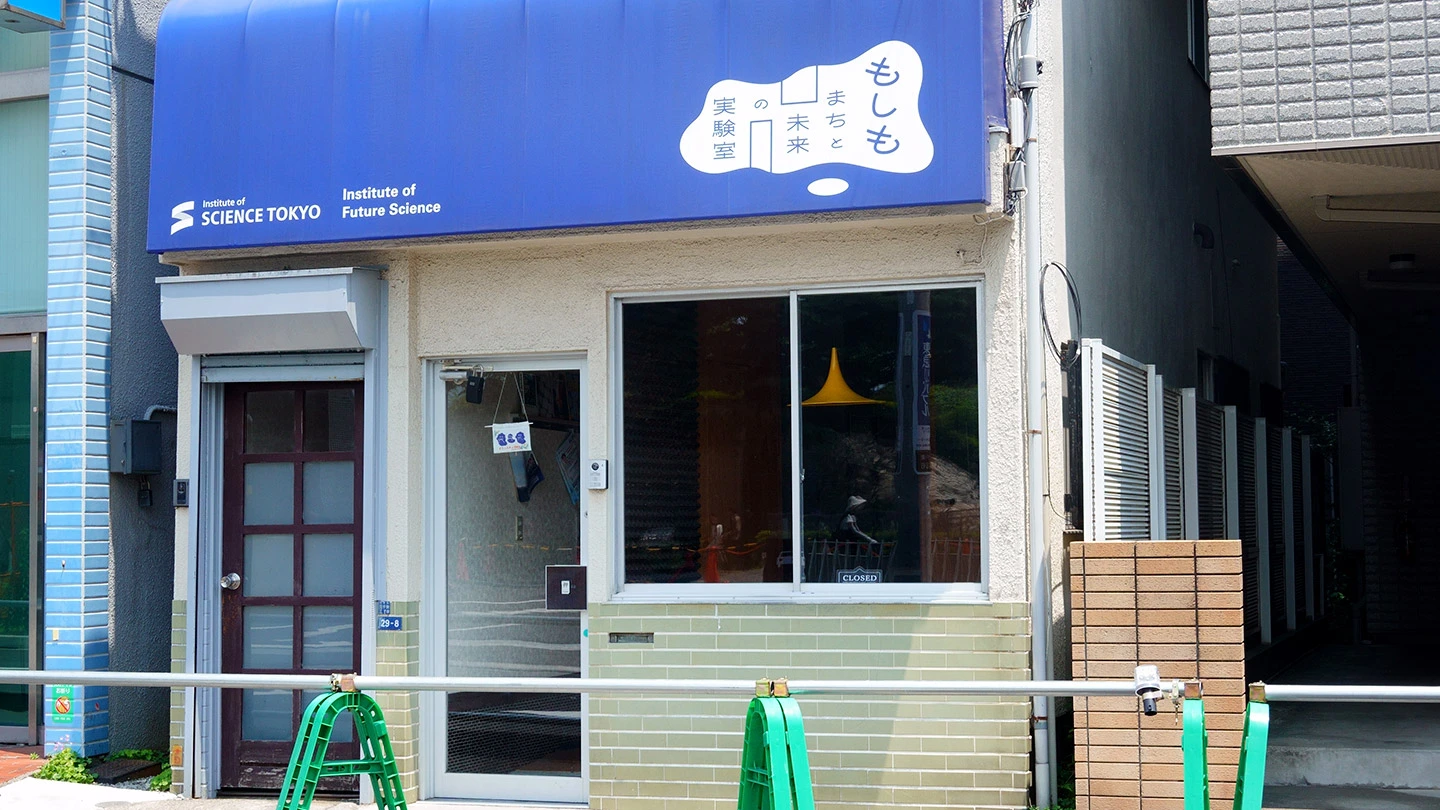
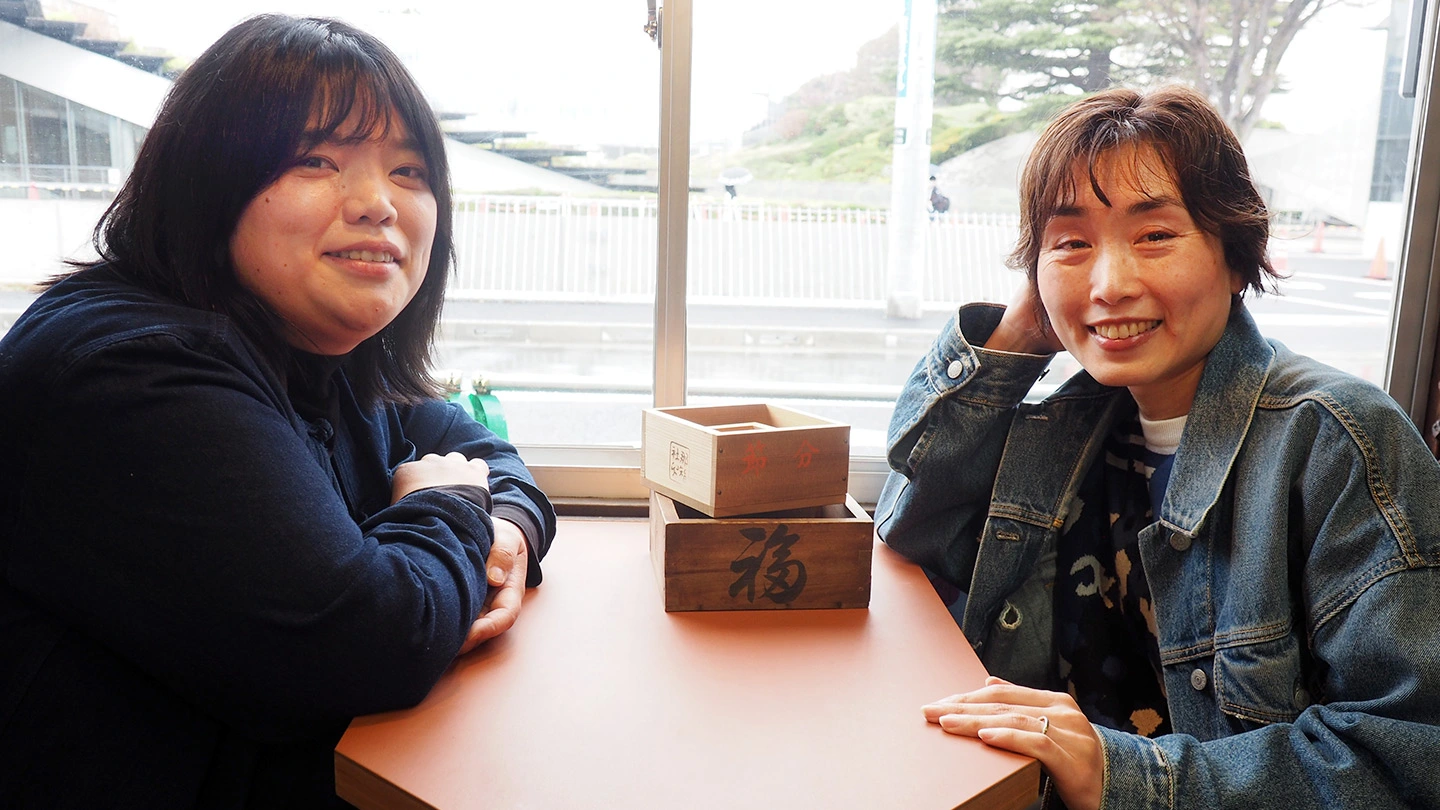
Tsuno recently visited Moshimo, Science Tokyo’s "laboratory for the city and the future" just outside Ookayama Campus, to speak about the work that launched her onto the global stage, her reasons for continuing to explore the topic of the human body through art, and what she learned at Science Tokyo.
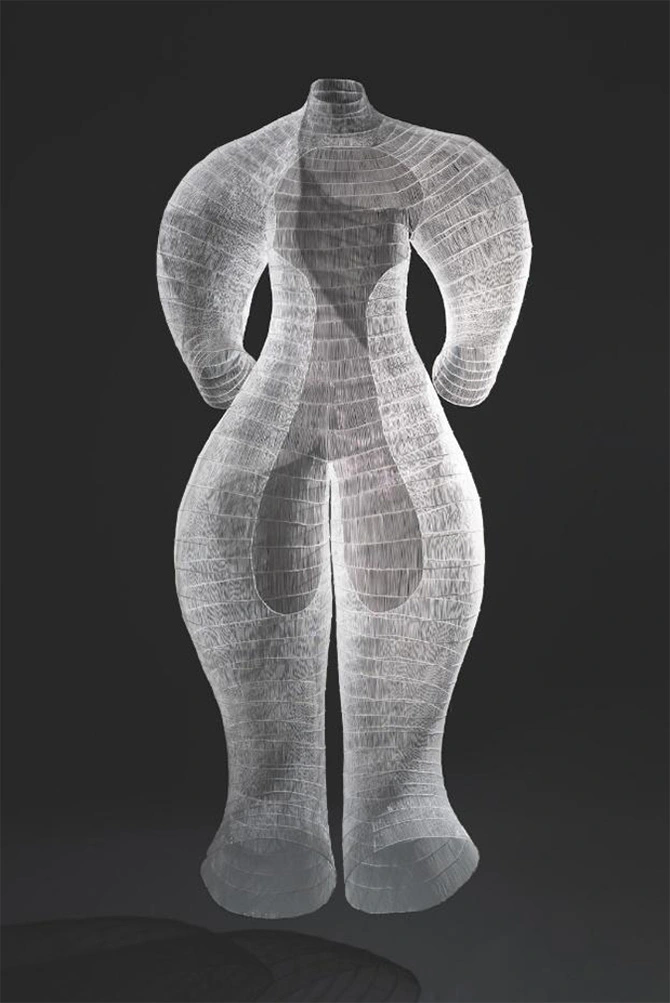
Photo by Fumiya Sakurai
Costume Art — A special exhibition
Costume Art has been ongoing at The Met in New York since May 2026. It is a large-scale exhibition that asserts the central role of the dressed body throughout art history, exploring the relationship between clothing, the body, and art. Andrew Bolton, curator in charge at the Costume Institute that organized the exhibition, positions clothing not merely as decoration or fashion, but as a form of expression that reflects the memory and existence of the human body. The exhibition shines a light on diverse bodily forms that have not been sufficiently addressed in the past — such as pregnant bodies, obese bodies, and bodies with disabilities — and poses questions such as Whose body is this? and What is the ideal body?
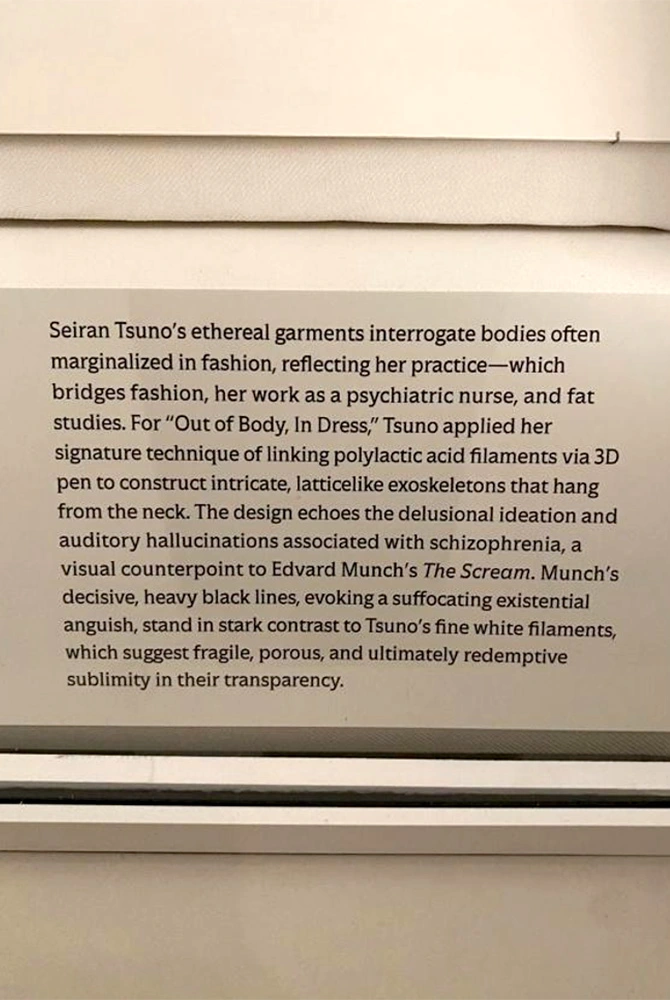
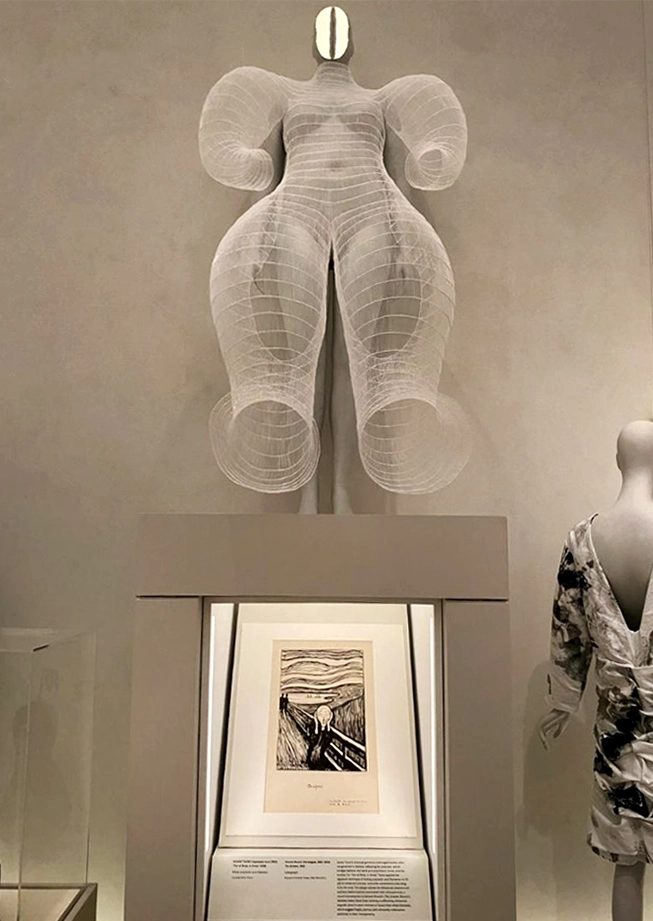
Tsuno’s work is also on display within this context. Her three-dimensional Out of Body, In Dress creation— born from her experience as a psychiatric nurse and her dialogue with her own body — is characterized by delicate, organic forms created with a 3D pen. Tsuno’s piece, recreated at the request of The Met, is displayed atop a lithograph of Edvard Munch’s The Scream, which symbolizes intense anxiety and loneliness. While expressing the fluctuations of the body and mind, Tsuno’s work evokes a sense of liberation and peace found beyond suffering, attracting the interest of many museum visitors.
Interview with Seiran Tsuno: The origins of the "human body" and "expression"
― First of all, congratulations on having your work selected for exhibition and acquired by the Metropolitan Museum of Art. Could you share your thoughts on this achievement?
Tsuno: Thank you. I still cannot believe it. In the fall of 2025, I received a message from Andrew Bolton, the Costume Institute’s curator in charge at The Met, asking for my collaboration on a special exhibition. The Met had always been a place I admired, but I was completely surprised to receive such a request at that time. I am delighted that my work has reached the other side of the ocean and has been added to the collection at such a special place.
― What kinds of thoughts and feelings are behind your artwork at The Met?
Tsuno: That is slightly difficult to answer. To be honest, I just wanted to make garments somehow. I created this piece while attending fashion school. Back then, I was only making headpieces and had never made any garments. When I was preparing to enter the International Talent Contest (ITS Contest), a European fashion competition, an instructor asked me why I only made headpieces and never clothes. I did not really have a clear answer myself, so I thought I would give it a try. That is how it all started. However, I had a strong aversion to traditional garment-making, that is, sewing with fabric, so I was looking for alternative methods. It was during this search that I happened to come across the 3D pen and the materials associated with it, and I gradually developed my own technique. From there, the Out of Body, In Dress series that includes the original version of the dress displayed at The Met, was born. Looking back now, I think the creation of this piece was the first catalyst that led me to engage with the topic of the "body," something I had unconsciously avoided until then.
A new perspective that created a sense of excitement about my own body
― Where did your interest in the human body originally come from?
Tsuno: I became acutely aware of this after joining a seminar run by Science Tokyo’s Professor Asa Ito. I had been overweight since childhood, and I had struggled for years with how to come to terms with my body. In my early teens, I began to feel the harsh gaze of society directed at me because of my weight, and I tried various coping strategies, including dieting. There was a time when I could not bear the sadness of being defenseless against that gaze, and my relationships with those around me became strained. Before others could look at me and call me fat, I would do things to take away those opportunities. For example, I would draw self-deprecating comics of myself being constantly insulted on the street and show them to those around me, or I would dress up in costumes that covered my entire body with makeup and clothing. My methods varied widely.
― What led you to decide to enroll at Science Tokyo?
Tsuno: After graduating from coconogacco (loosely translated as "the school of here or of the individual" ) fashion school, I was thinking about how I wanted to move forward in my career. I had a feeling that I would not fit into the fashion industry as it is commonly understood. The insights I had gained while working as a psychiatric nurse overlapped with my creative experiences at that school, and I began to think that perhaps there were things I could see precisely because I straddled different fields. Around that time, I learned that Ito — who had also served as a critic at coconogacco — was researching the experiences of people with disabilities from an aesthetic perspective. This seemed very close to what I wanted to study. My desire to take more time to reflect on my own creative work and interests — and to put them into words — led me to enroll in the graduate program at Science Tokyo.
― What did you learn at the Asa Ito Laboratory?
Tsuno: The most significant thing was discovering a new perspective on my own body — focusing not on how others see me, but on how I feel and what is actually happening. For a long time, I had viewed my body solely through the lens of "how others see me." But since that perspective is constantly fueled by comparisons with other people’s bodies, it is a never-ending cycle. It was also a painful time, one where I would sigh whenever I looked in the mirror. On the other hand, when examining how I feel and what is happening, there is no "right answer" or "average quantity." No matter how strange a sensation may be, if I observe it closely, I find unexpected discoveries. It was only after encountering this perspective that I was able to feel a sense of excitement toward my own body for the first time. Through these lessons, my research topics, my writing, and my artistic practice naturally came to revolve around bodily experiences. Ito was someone who posed questions rather than providing answers. Through my dialogue and research with her, I came to view my own body not as something to be compared or evaluated, but rather as a kind of mystery novel.
The fascination of reflecting on the human body, as confirmed in my dialogue with Professor Ito
― You participated as a guest speaker in a discussion with Ito at the event celebrating the reprint of her book Creating a Place for the Body, published by Asahi Press. Could you tell us what stood out to you during those discussions?
Tsuno: Through Ito’s research, I had the experience of truly encountering my own body for the first time. In particular, the interview with a person who had experienced an eating disorder, featured in Chapter 1 of Ito’s book, was a major turning point for me. I felt a deep sense of kinship with that person had tried to control their own body, how they had suffered from the body’s "retaliation," and yet still wanted to reconnect with and reconcile with their body once more. Listening to the body’s voice and feeling one’s body are by no means a given. But it is alright to want to feel it again and reconnect with it. As I read that account and spoke with Ito, I gradually felt as if life were being breathed into my own body. It was the kind of realization that made me think, "Oh, I have a body, too."
From there, while a sense of familiarity and tenderness toward my body began to emerge, a feeling of guilt about what I had done to it up until then also surfaced. How could I repair the relationship with my body? How could I atone for my sins? Driven by these thoughts, making garments and writing about the body became my own attempt at reconciliation. However, simply doing those things did not magically change the relationship. Even now, there are times when, despite wanting to take care of my body, I find myself forgetting about it and wanting to get swept away by the pleasures of the moment. Even though I know it is not good for my body, I am drawn in that direction. I call these moments and this tendency "yokai ("goblin") time" or "yokai nature." At first glance, the desire to reconcile with my body and the desire to forget about it seem like complete opposites. But for me, both stem from the same relationship with my body. In my conversation with Ito, I feel I was able to reaffirm the fascination of considering the body in a way that encompasses both aspects.
My grandmother’s presence — A major source of inspiration for my art
― What kind of research did you undertake for your master's thesis?
Tsuno: The title of my master’s thesis was How to Relate to 'Fat' Bodies: Insights from Collaborative Clothing Production. This research explored the bodily sensations among people who have perceived themselves as "fat," and the ways they relate to their bodies. Drawing on the concepts of participant-led and art-based research, I worked with participants to create garments together, exploring bodily sensations that are difficult to capture through words alone. I chose to use the term "fat" rather than the medical term "obese" because I wanted to focus on individual bodily experiences, which cannot be fully captured by weight or numerical values alone. It was challenging to develop the research methodology itself through trial and error. However, the ongoing reflection with the participants about how to live with bodies we find difficult to relate to proved deeply meaningful.
― I hear your grandmother played a significant role in your creative work as well.
Tsuno: Yes. I have always been very close to my grandmother. Ever since I was little, I have been deeply attracted to her, drawing portraits and making dolls of her. As I have gotten older, I have become increasingly fascinated by the sagging skin and wrinkles on her face, as well as the way she moves. Her very presence — her voice, her scent, the way she speaks, the stories she tells — holds a special charm for me. She has always been like a muse to me, so it felt right to have her wear any nice clothes I created. Although the dress I created with the 3D pen was not specifically designed for her, it was only natural that she ended up wearing it.
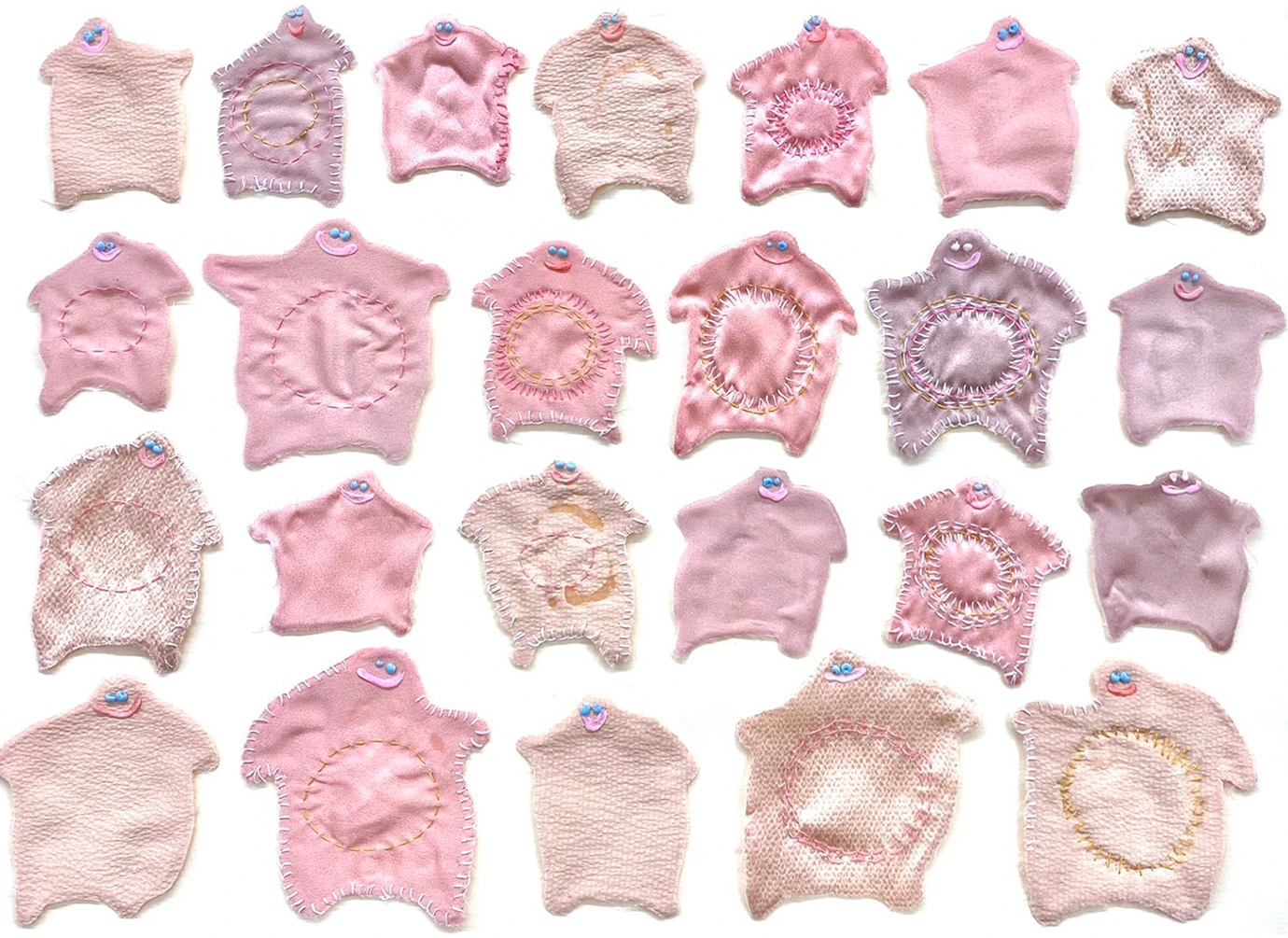
While exploring my research topic and investigating my own bodily sensations, I once created dolls modeled after my own fat cells. When my grandmother saw them, she said, "That’s me." At that moment, I realized again how deeply the issues I had been contemplating, such as the human body, attachment, and memory, were intertwined with my relationship with my grandmother. Even now, every day I spend with her feels uplifting. These are always the most precious times for me.
This long journey of inquiry has been a great treasure to me
― Your experiences as a nurse at the Bethel’s House community center in Urakawa Town, Hokkaido Prefecture, also had a major influence on you, correct?
Tsuno: My time there was a very significant experience. Before entering graduate school, I moved to Urakawa Town in Hokkaido and worked as a nurse at Bethel’s House, a community center where people with experiences of mental illness and other challenges come together. The people there conduct participant-led research, collaborating with peers to explore the challenges they face in their daily lives. Before going there, I had spent many years working in hospitals with strict rules, so this community center felt like a thrilling yet liberating place. Through communal living and working together, we shared many experiences. This sharing allowed words and ways of helping that resonated with each individual to emerge. This process seemed like creating a custom-made garment for myself together with my peers — a garment we would alter, remake, and keep mending forever. On the other hand, there were many situations where the principles and methods I had imagined based on what I had read in books simply did not apply. While putting things into words can open doors, I also feared that things might spill over and be lost if they were reduced solely to words. That is precisely why, even as I was baffled by the daily events I experienced, I worked alongside everyone, wrestling with these issues and reflecting on them together. This experience has had a profound impact on my subsequent research and artistic practice.
― In the exhibition at The Met, your work is displayed above Munch’s The Scream. I felt as though your piece depicted the liberation of the body beyond The Scream, which symbolizes anxiety and oppression.
Tsuno: I had heard beforehand that my work would be exhibited alongside a piece from The Met’s collection, so I was curious to see what it would be paired with. When I found out on site that it was The Scream, I was surprised. At the same time, I could not help but chuckle a little, wondering, "Why?" Later, after reading the text by curator Bolton, I realized that he was drawing parallels between Munch’s mental anguish and experiences with illness and my own experiences as a nurse. However, this piece was not created with a clear concept in mind from the start. As I mentioned, it began with the impulse to make garments and was born out of a series of coincidences. Since I was not directly conscious of my experiences in mental health care while creating it, there are aspects that can only be explained by looking back on the work after it was completed.
I think my work reflects feelings I have carried for a long time — the sensation that my body is not truly my own, and the urge to escape from it. I have been sustained by images of suddenly breaking free from my heavy body and flying off somewhere. However, seeing my work displayed alongside Munch’s The Scream and reading Bolton’s text, I have come to feel that these sensations are not unique to me, but rather resonate with many people. They also feel that their minds and bodies do not always do what they want them to. It seems that various unintended meanings have emerged through the context of the exhibition.
― Finally, could you share a message directed at the students and alumni of Science Tokyo?
Tsuno: Science Tokyo provides an environment where students can pursue cross-disciplinary studies that incorporate perspectives from the humanities and social sciences, science and engineering, and the medical and dental sciences. I studied in graduate school while working as a nurse. Although some classes were challenging for a working student, I was able to study at my own pace, and even take a leave of absence from my studies. It was a truly enriching experience. Even within the same Social and Human Sciences program, I had opportunities to interact with people researching completely different fields, and I developed the ability to communicate my research and goals to people from diverse backgrounds.
As I pursued my studies, the ideas I had previously considered solely through my personal experiences began to connect with the words of those who had explored similar questions before me, and with academic fields I would never have encountered on my own. After submitting my thesis, honestly, I was left with a sense of frustration. I could not just end it there, and before I knew it, I found myself on a very long journey of inquiry. For me, this journey has been a great treasure. I hope that all students and alumni will take their time and engage with similar timeless questions for many years to come.
Profile
Seiran Tsuno
Artist, fashion designer, nurse
Tsuno was born in 1990. After graduating from nursing college, she studied at coconogacco, a fashion school founded by Yoshikazu Yamagata, while working at a psychiatric hospital. In 2018, she garnered attention for a collection of dresses created using a 3D pen, one of which was selected as a finalist at the ITS Contest, Europe’s largest fashion competition.
Since 2019, Tsuno has been working as a nurse at Bethel’s House, a community activity center in Urakawa Town, Hokkaido Prefecture, for people with mental health conditions and other disabilities. In the spring of 2026, she completed her master’s degree at Institute of Science Tokyo.
Tsuno also exhibits her works at art festivals and contributes to literary magazines. She held her first solo exhibition, Aperto 20: Seiran Tsuno — The Unreconciled Body, at the 21st Century Museum of Contemporary Art in Kanazawa, Japan. She is currently preparing her first book, "Fat" Bodies (tentative title), to be published by Bungeishunju Ltd.
Moshimo: A laboratory for the city and the future
Moshimo, a laboratory for the city and the future, is located in front of the main gate of Ookayama Campus. It serves as a space for dialogue between Science Tokyo and the surrounding neighborhood, and is dedicated to crafting alternative visions of tomorrow that no one has yet imagined. Through talk events, workshops, improvisational theater performances, art exhibitions, and a wide range of other activities, the space layers countless hypothetical futures (IFs) upon one another, working toward a tangible and textured vision of the society to come.